Understanding OT for children with autism
When your child is first diagnosed, you might hear many professionals recommend OT for children with autism. Occupational therapy can feel like a vague term at first. In reality, it is a very practical, hands-on approach that helps your child participate more fully in everyday life at home, school, and in the community.
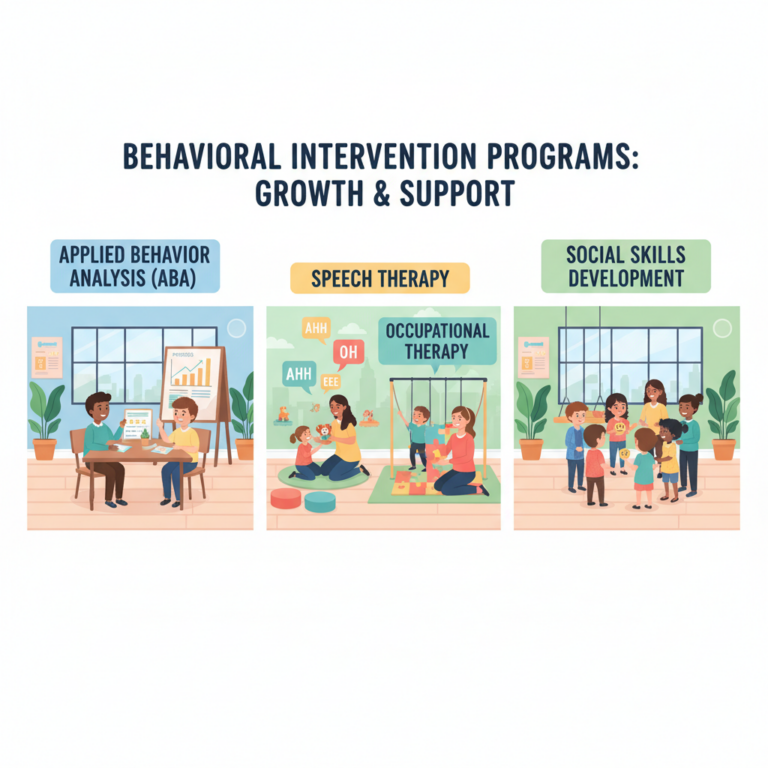
Occupational therapists focus on what your child needs and wants to do in daily routines. For autistic children, that often includes self-care, play, learning, social participation, and managing sensory experiences. OT is usually one piece of a broader support plan that can also include autism behavior therapy services, speech therapy, and social skills support.
You do not have to figure this out alone. A pediatric OT partners with you to identify barriers, set realistic goals, and build skills step by step.
How occupational therapy helps children with autism
Occupational therapy for children with autism targets real-life skills instead of isolated exercises. Your child practices what matters in their daily world, using play-based strategies and meaningful activities.
According to Brown University Health, OTs help children with Autism Spectrum Disorder access natural environments more easily, increase independence, and participate in activities that are meaningful to the child and family [1]. That focus on function and participation is at the heart of OT.
A typical OT plan for autism may address:
- Daily living skills such as dressing, brushing teeth, eating, and toileting
- Fine motor skills like writing, drawing, using utensils, and managing clothing fasteners
- Sensory processing and self-regulation so your child can stay calmer and more focused
- Play skills, including taking turns, pretending, and exploring new activities
- Early school skills, such as using classroom tools, following routines, and staying seated
As you move through therapy, you and your OT regularly review and adjust goals to match your child’s progress, age, and environment.
Sensory processing and regulation
Many parents first consider OT for children with autism because of sensory challenges. Your child might seem overwhelmed by noise, avoid certain textures, or seek constant movement. These patterns can impact sleep, eating, hygiene, and participation in school or community activities.
Brown University Health notes that children with ASD often have sensory modulation differences that affect how they process sight, sound, touch, taste, smell, body position, and balance, which can complicate everyday tasks such as tooth brushing or recess [1].
What an OT does with sensory challenges
An OT will typically:
- Complete a sensory evaluation to understand how your child responds to different inputs
- Identify which sensations are calming, alerting, or overwhelming
- Develop a plan that uses sensory activities to support focus, regulation, and comfort
These plans often include a “sensory diet” or “sensory circuit,” which Connect n Care ABA describes as personalized sets of activities that can improve focus, attention, emotional regulation, and overall well-being [2].
You might see your child:
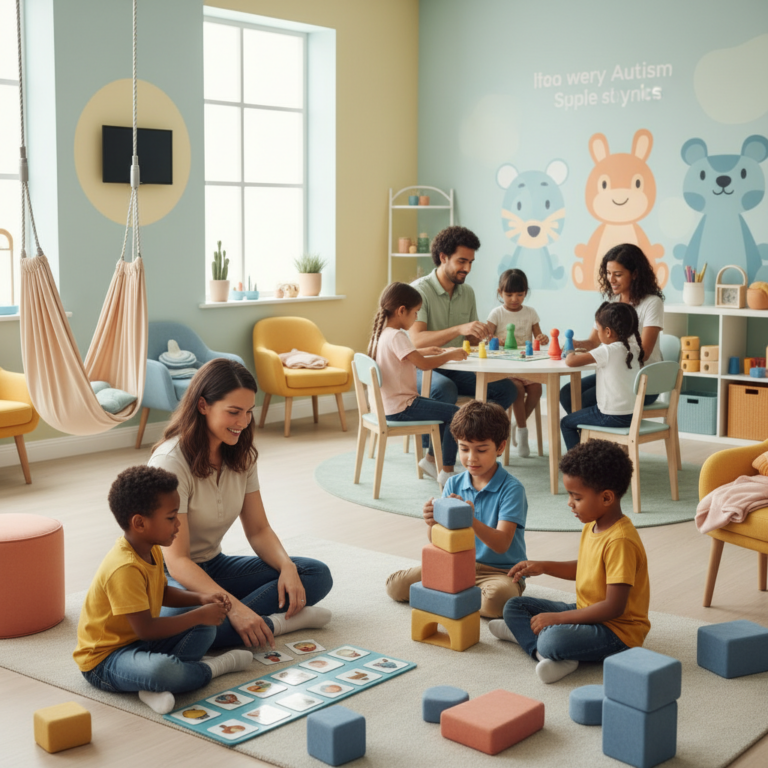
- Swinging, jumping, or crawling through tunnels
- Using fidgets, weighted items, or deep pressure for calming
- Practicing tolerating grooming tasks with gradual exposure and support
The goal is not to “fix” sensory differences. Instead, your OT helps your child understand their own sensory needs and use practical tools to navigate daily life more comfortably.
Building self-care and daily living skills
One core focus of OT for children with autism is increasing independence in daily routines. This can be especially important if you feel you must assist your child with every step from morning to night.
Occupational therapy for autism emphasizes self-care skills like dressing, bathing, grooming, toileting, and feeding [3]. Your OT looks at both the physical and sensory components of these activities and breaks them into manageable steps.
You might work together on:
- Dressing skills, such as putting on socks, shoes, and jackets in a predictable order
- Tooth brushing, using visual schedules and desensitization if your child is sensitive to taste or texture
- Eating routines, including sitting at the table, using utensils, and expanding tolerated foods
- Toileting routines, with step-by-step supports and strategies for sensory comfort
Consistency is crucial. Brown University Health emphasizes that aligning OT strategies with daily routines helps children with ASD learn motor, daily living, and social skills more effectively so they can grow into functioning adults [1].
Your OT will typically coach you on how to practice these skills at home so progress continues between sessions.
Fine motor, play, and school readiness
OT for children with autism also supports the small-muscle skills needed for play and learning. These abilities often connect directly to school success and self-confidence.
Fine motor and coordination
In sessions, your child may practice:
- Grasping crayons, markers, and pencils
- Cutting with scissors and manipulating small objects
- Building hand strength and dexterity through games and crafts
These activities prepare your child for handwriting, drawing, and classroom tasks such as opening containers or using classroom tools.
Play and learning skills
OTs use a play-based model that is individualized and holistic. Brown University Health notes that this approach motivates children to learn daily skills in a way that feels enjoyable rather than like work [1].
You may see your child:
- Practicing turn-taking and sharing in simple board games
- Exploring pretend play, which supports language and social skills
- Learning to follow multi-step directions through play-based tasks
When OT is part of autism therapy programs, these skills are often coordinated with goals from ABA or education plans, so your child experiences repetition and reinforcement across settings.
Social participation and emotional skills
While OT is not a replacement for specialized social skills or counseling, it can play an important role in supporting social participation and emotional regulation.
Connect n Care ABA highlights that key OT goals for children with autism include social skill building through role-play and group activities, as well as emotional regulation techniques that foster independence and social confidence [2].
In OT, your child might:
- Practice greeting others, asking for help, or joining a game
- Learn to recognize body signals that show they are getting overwhelmed
- Use tools like visual scales, breathing exercises, or movement breaks to calm down
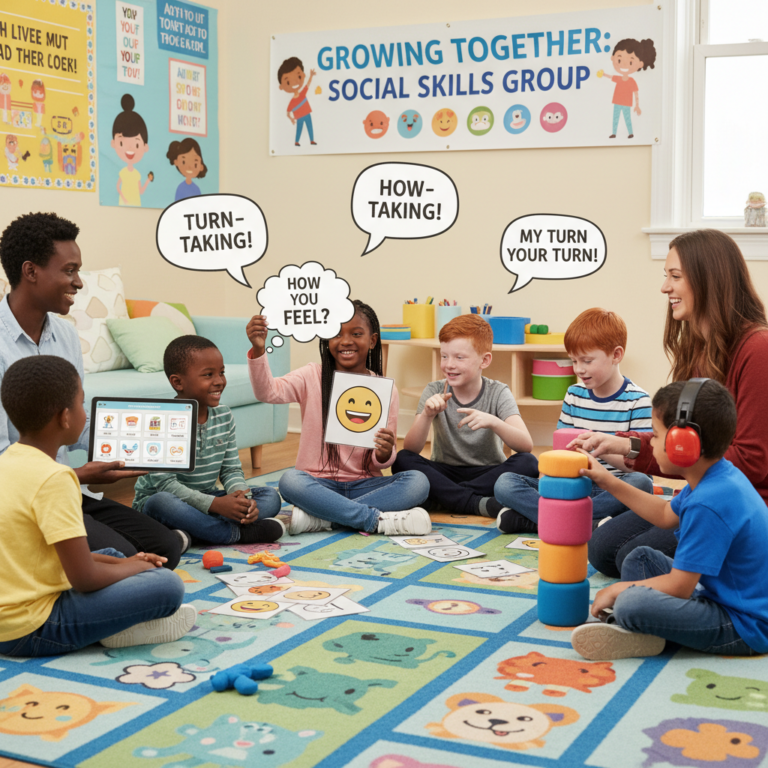
- Participate in small group activities that support cooperation and shared attention
If your child also attends autism social skills groups or receives social skills therapy autism, your OT can coordinate strategies so everyone uses the same language and supports.
What happens in an OT evaluation
When you begin OT for children with autism, the first step is an evaluation. This is a structured process that looks at your child’s strengths, challenges, and daily environments.
Autism Speaks explains that OTs evaluate children with autism by assessing current abilities and identifying obstacles to daily activities, then setting individualized goals and strategies [3].
Your evaluation might include:
- Parent interview about routines, concerns, and priorities
- Observation of your child at play and during simple tasks
- Standardized assessments of motor skills, sensory processing, or daily living skills
- Discussion of school expectations and any IEP or 504 plan
Together, you and the OT identify a set of specific, functional goals. These might be written into a broader autism therapy plan development process if your child is receiving multiple services.
Evidence that OT can make a difference
You may wonder whether OT for children with autism is truly effective. Emerging research supports its value, especially when sensory integration approaches and consistent practice are used.
A study from a child psychiatry clinic in Turkey looked at children aged three to nine with ASD who received occupational therapy including sensory integration. Using the Autism Behavior Checklist, researchers found significant improvements in sensory processing, relationship-building, language skills, and social and self-care abilities after five and ten OT sessions (p < 0.05) [4].
Scores on the checklist decreased, indicating fewer difficulties, in nearly all areas. Sensory scores improved by over 90 percent, and relationship-building, language, social, and self-care scores improved by roughly 92 to 96 percent across pre-therapy, five sessions, and ten sessions [4].
The study also found that:
- The largest gains often occurred in the first five sessions
- Improvement continued with ten sessions, though at a slower rate
- One area, body and object usage, did not show statistically significant change
There were limitations, including a lack of a control group, a three-month duration, and reliance on parent reports. The authors noted that more research is needed to understand long-term outcomes [4].
Even with these caveats, the results align with what many families and clinicians observe. OT can be a powerful support for building skills that matter in everyday life when it is consistent, individualized, and integrated with home and school routines.
OT is most effective when it is part of a coordinated plan that you understand, support, and carry through in daily routines, not just something that happens in a clinic once or twice a week.
How OT fits with ABA, speech, and social skills therapy
You may already be exploring aba therapy for autism, autism speech & language therapy, and social skills supports. OT is designed to work alongside these services, not in competition with them.
OT and ABA
In many autism behavioral intervention programs, OTs and behavior analysts collaborate. For example, an OT might:
- Identify sensory strategies that help your child stay regulated during ABA sessions
- Break down self-care tasks into steps that ABA can target with reinforcement
- Contribute to an autism functional behavior assessment by highlighting sensory or motor factors behind challenging behaviors
This type of integrated care is often organized through integrated therapy autism services or an applied behavior analysis center.
OT and speech therapy
If your child attends a speech therapy autism center, the OT and speech-language pathologist can support each other’s goals. For instance:
- OT can address seating, posture, and sensory needs that impact attention in speech sessions
- Both professionals can reinforce communication strategies such as using visuals, signs, or AAC
- Play-based OT activities can provide natural opportunities to practice new words and social language
OT and social skills supports
OTs may work directly on social participation goals or coordinate with autism social skills groups. Together, they can ensure your child has the self-regulation and practical skills needed to succeed in peer-based settings.
When you choose an autism support therapy clinic that offers multiple services, you can often streamline communication and make sure everyone uses consistent strategies.
Getting started with OT after diagnosis
If your child is newly diagnosed, it is common to feel pressure to “start everything at once.” It can help to take a structured approach to OT and other services.
Early diagnosis and intervention are linked with better outcomes in behavior, cognition, communication, social skills, and daily living abilities [2]. You do not need the “perfect” plan in place to begin. Starting with a clear OT evaluation and realistic first steps is often enough.
Here are some practical steps to consider:
- Ask your pediatrician or diagnostic provider for OT referrals
- Contact your local autism support therapy clinic and ask specifically about occupational therapy autism services
- If your child is under three, explore Early Intervention, which can offer occupational therapy at low or no cost based on income [3]
- If your child is school-aged, request an evaluation for OT as part of an Individualized Education Program (IEP) because school-based OT is often provided at no cost to families [3]
- Ask potential providers about autism therapy insurance accepted and how OT fits within their broader behavioral intervention programs
Many families find it helpful to combine OT with early intervention behavioral therapy, speech services, and parent training supports such as parent training in aba.
What to expect in ongoing OT sessions
Once OT begins, sessions are usually 30 to 60 minutes, with frequency based on your child’s needs and treatment setting [3]. Skills are practiced in therapy and then generalized at home and, when possible, at school.
In an ongoing OT program, you can expect:
- A predictable structure, with warm-up activities, focused practice, and cool-down
- Activities that feel like play but are carefully chosen to build targeted skills
- Coaching so you can carry strategies into daily routines
- Periodic progress reviews and updates to goals
If you are also using therapy support for autism in other domains, you can share OT reports with your other providers so everyone is aligned.
Telehealth OT has also expanded access, with Connect n Care ABA noting that it offers flexible delivery and helps maintain therapy continuity when in-person sessions are not possible, although it does require active family engagement and some technology adaptation [2].
Integrating OT into your family routines
For OT for children with autism to be truly powerful, it needs to connect with your everyday life. That does not mean adding hours of “homework” to an already full schedule. It means weaving therapeutic strategies into what you already do.
You and your OT might:
- Turn dressing time into a practice opportunity with visual steps and extra time when possible
- Use sensory strategies before challenging situations, such as school drop-off or noisy stores
- Create small, repeatable routines around meals, playtime, and bedtime that build independence
- Coordinate strategies with your child’s teachers and other therapists through integrated therapy autism services
Over time, you will likely become more confident at spotting opportunities for skill-building. OT is not just about what happens in the clinic. It is about giving you and your child tools you can use every day.
Bringing it all together
OT for children with autism is most effective when it is:
- Individualized to your child’s strengths, challenges, and interests
- Grounded in real-life activities and routines
- Coordinated with other supports such as autism behavior therapy services, autism speech & language therapy, and social skills therapy autism
- Supported by consistent practice at home, school, and in the community
When you choose to include OT as part of your child’s therapy support for autism, you are not just adding another appointment. You are investing in skills that can help your child participate more fully, feel more comfortable in their body and environment, and move toward greater independence over time.
If you are ready to explore options, connecting with an autism therapy programs provider who offers coordinated OT, behavioral, speech, and social supports can help you create a comprehensive and sustainable plan for your child.