Understanding what an applied behavior analysis center offers
When you start searching for an applied behavior analysis center, you are often doing it in the middle of big emotions. A new diagnosis, school challenges, or behavior that suddenly feels unmanageable can make every decision feel urgent. Knowing how these centers work and what high quality ABA services look like can help you move from overwhelm to a clear plan.
Applied Behavior Analysis, or ABA, is a treatment based on the science of learning and behavior. ABA therapy focuses on increasing helpful behaviors and reducing behaviors that are unsafe or interfere with learning, while teaching new skills in communication, social interaction, and daily living [1]. When you choose a center that uses ABA thoughtfully, it can become the hub for all of your child’s behavioral and developmental supports, including speech, occupational, and social skills therapies.
An applied behavior analysis center that truly transforms outcomes does not simply offer sessions. It builds a coordinated system of care around your child and your family, using data, collaboration, and compassion to guide each step forward.
How ABA therapy works in practice
You might hear a lot of technical language when you talk with ABA providers. Underneath the jargon, ABA follows a clear and very structured process that you can understand and ask questions about.
Assessment and goal setting
Your child’s ABA journey should begin with a detailed assessment conducted by a Board Certified Behavior Analyst, or BCBA. This is not a quick checklist. A qualified BCBA gathers information about:
- Your child’s communication, social, and play skills
- Daily living skills, such as dressing, eating, and toileting
- Behavior that is unsafe or gets in the way of learning
- Your child’s interests, preferences, and strengths
- Your family routines, stressors, and priorities
Using tools like a functional behavior assessment, your BCBA identifies why certain behaviors happen and what skills need to be built to help your child succeed. A strong applied behavior analysis center will also work with you on a clear autism therapy plan development process, so you know exactly which goals are being targeted and why.
Individualized treatment plans
Every ABA program should be individualized. This means your child’s treatment plan is tailored to their specific skills, needs, interests, and family situation, not copied from another child’s file [2]. Goals might include:
- Using words, pictures, or devices to communicate
- Tolerating changes in routine
- Playing cooperatively with peers
- Following classroom instructions
- Reducing aggression, self‑injury, or property destruction
- Increasing independence in self‑care tasks
The BCBA then breaks each goal down into small, teachable steps. These steps are used to design behavioral intervention programs that can be practiced in therapy sessions, at school, and at home.
Positive reinforcement and skill building
Modern ABA focuses on positive reinforcement instead of punishment. When your child uses a new skill or makes a safer choice, the therapist pairs that behavior with something your child finds genuinely rewarding. This might be praise, a favorite toy, a short break, or access to a special activity. Over time, this pattern of behavior followed by a valued reward makes the behavior more likely to occur again [2].
Therapists use different teaching formats, including:
- Structured practice at a table
- Play‑based learning on the floor
- Natural opportunities that come up in your everyday routines
Common ABA methodologies include Discrete Trial Training, Pivotal Response Treatment, and the Early Start Denver Model, each with a different balance of structure and play, but all grounded in the science of behavior and learning [3].
Intensity and duration
Research shows that intensive, long‑term ABA, typically 25 to 40 hours per week for 1 to 3 years, can improve intellectual functioning, language, daily living skills, and social functioning for many children with autism [2]. Other studies suggest that starting therapy before age 4 and providing more than 20 hours per week can significantly reduce the need for services later in life [3].
You may not need or choose the maximum number of hours. A high‑quality applied behavior analysis center will help you weigh clinical recommendations, your child’s tolerance, school demands, and family capacity to arrive at a schedule that is challenging yet sustainable.
What sets a high quality ABA center apart
Not every applied behavior analysis center follows the same standards. Knowing what to look for will help you find a provider that is more likely to deliver meaningful change for your child and support for your family.
Qualified and supported clinical team
A quality ABA provider should employ certified and, when required, licensed staff. At a minimum, you should expect:
- A Board Certified Behavior Analyst (BCBA) managing your child’s case, designing the program, and making ongoing decisions [4]
- Registered Behavior Technicians (RBTs) or therapists providing direct sessions under BCBA supervision [2]
- Reasonable staff‑to‑client ratios that allow for individual attention
Ask how often your BCBA will see your child directly, how many hours per week are devoted to supervision, and how new staff are trained before working independently. These details matter for outcomes.
Safety and child‑centered environments
Your child’s ABA center should feel physically safe and emotionally safe. Accreditation bodies and clinical organizations recommend that centers:
- Minimize sharp or unsafe objects in therapy spaces
- Reduce escape risks by monitoring exits and room layout
- Organize furniture to support safe movement and clear supervision
- Avoid physical management of children without clear assent and only when absolutely necessary for safety [5]
You should also feel welcome. A reputable center typically offers tours, invites your questions, and encourages you to trust your instincts if something does not feel right. Therapy should become a source of support, not added stress [6].
Data‑driven and transparent decision making
One hallmark of strong ABA is consistent data collection. Therapists record how often behaviors occur and how independently your child completes skills. Effective centers use these data to:
- Monitor progress and adjust programs
- Decide when to make goals harder or easier
- Identify patterns that might be affecting behavior, such as fatigue or medication changes
External organizations emphasize that parents should be included in understanding what is being measured and how decisions are made [5]. When you review graphs or reports, ask your BCBA to explain them in plain language. You deserve to know how your child is doing and why the plan is changing over time.
Accreditation and external oversight
Accreditation is not a guarantee that a center is perfect. It is, however, a sign that the organization has undergone review by an independent body that uses formal standards. Quality providers are typically transparent about:
- Which organization accredits them
- What those standards cover
- How long they have been operating under those standards [5]
You can ask directly about accreditation in your initial call or consultation, and you can combine this information with your impressions from visiting the center.
Integrating ABA with speech, OT, and social skills therapy
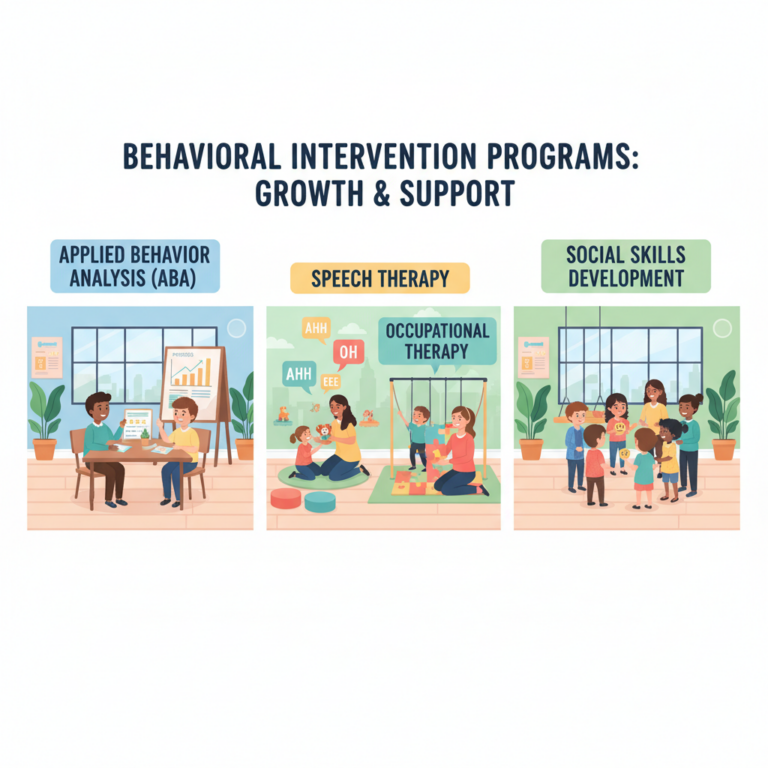
For many families, an applied behavior analysis center is just one part of a broader network of supports. The most transformative outcomes often come when ABA is coordinated with speech therapy, occupational therapy, and structured social skills work.
Coordinated behavioral and speech therapy
If your child has communication delays, it is important that ABA and speech therapy are aligned. You might work with a dedicated speech therapy autism center or an ABA program that employs or partners with speech‑language pathologists.
In practice, this coordination means:
- Choosing one communication system, such as spoken words, sign, or a device, and using it consistently
- Following shared goals for vocabulary, requesting, and understanding directions
- Practicing communication during ABA sessions and in specialized autism speech & language therapy sessions
ABA strategies like positive reinforcement can be paired with speech therapy targets, so that every successful communication attempt is noticed and rewarded.
Occupational therapy and daily living skills
Occupational therapy, or OT, focuses on helping your child participate in everyday activities. Many families seek occupational therapy autism services, or specific ot for children with autism, to address:
- Fine motor skills, such as writing or using utensils
- Sensory processing challenges, such as sensitivity to noise or clothing
- Self‑care tasks, including dressing, grooming, and toileting
When OT and ABA are coordinated, your child’s behavior plan can support the same goals that your occupational therapist is targeting. For example, ABA therapists can use reinforcement to help your child tolerate new textures or follow a multi‑step morning routine, while OT provides the underlying sensory and motor strategies.
Social skills groups and peer interaction
Developing friendships and navigating group settings can be especially challenging for children with autism. An applied behavior analysis center that offers autism social skills groups or partners with a program specializing in social skills therapy autism can give your child a safe place to practice.
In these groups, your child might work on:
- Taking turns and sharing materials
- Joining play without overwhelming peers
- Reading facial expressions and tone of voice
- Handling small conflicts and repairs in friendships
When these skills are also reinforced in one‑to‑one ABA sessions, your child has more chances to generalize what they learn to school, the playground, and family gatherings.
Integrated therapy models
Some providers offer fully integrated therapy autism services, housing ABA, speech, OT, and social skills programs under one organizational umbrella. Others coordinate closely with external therapists and act as your central autism support therapy clinic. In both cases, the goal is to:
- Align assessment findings
- Set shared priorities across disciplines
- Reduce duplicated or conflicting strategies
- Create a consistent plan that makes sense to your child
If your child is just starting out, it can be helpful to explore comprehensive autism therapy programs where these services are considered together instead of separately.
When ABA, speech therapy, occupational therapy, and social skills support are coordinated, you are no longer managing a separate plan for each service. You are moving your child forward along one unified path.
Early intervention and dosing: What the research tells you
You may feel pressure to make quick decisions about therapy hours and when to start. Understanding how research informs these recommendations can help you advocate for what fits your child and family.
Early and intensive support
Multiple organizations report that early and intensive ABA can be particularly impactful. Intensive programs that provide 25 to 40 hours per week of ABA for 1 to 3 years have been associated with improvements in language, daily living skills, and social functioning [2]. Other analyses suggest that providing more than 20 hours per week before age 4 can lead to meaningful developmental gains and reduce the need for services later [3].
Early ABA is also likely to be cost effective over the long term, potentially reducing lifetime autism care costs by increasing independence and decreasing the need for future support services [7].
You can explore early intervention behavioral therapy options that combine ABA with other developmental supports, especially if your child has recently received a diagnosis.
Real‑world challenges with ABA dosing
Although research favors intensive programs, real families often face barriers to achieving these recommended doses. One study of children referred for ABA in a large health system found that:
- Only 66 percent remained in services for 12 months
- Just 46 percent were still in services at 24 months
- Only 28 percent of those who stayed the full 24 months received at least 80 percent of their prescribed hours [8]
Importantly, many reasons for discontinuation, such as moving, insurance changes, or family decision to stop, were unrelated to clinical progress. Even with these challenges, children with lower baseline adaptive skills still made significant gains over time [8].
This means you are not alone if your family cannot maintain the maximum number of hours. It also highlights the importance of choosing an applied behavior analysis center that listens to your realities, supports you in problem solving around schedules and coverage, and helps you get the most from the hours you can commit.
Balancing therapy with quality of life
More hours are not always better if your child is exhausted or your family is overwhelmed. You can expect your team to consider:
- Your child’s age, stamina, and sensory needs
- School attendance and homework demands
- Sibling needs and family routines
- Transportation and financial constraints
You might start with an intensive schedule during a particular season, then reduce hours as your child gains skills and school demands change. A flexible autism therapy plan development process can help you keep the plan realistic while still ambitious.
In‑home, center‑based, and hybrid ABA options
Not all ABA happens in the same setting. The best location depends on your child’s goals, behavior, and comfort level, as well as your family’s schedule.
Center‑based ABA services
In a center‑based program, your child attends therapy at the provider’s facility. This approach can:
- Reduce distractions and provide a predictable environment
- Offer opportunities to practice group skills and transitions
- Make it easier to integrate multiple therapies in one location
Center‑based care is often helpful for structured autism behavioral intervention and early learning skills. Some families also appreciate the separation between home and therapy, especially when challenging behaviors have been stressful in the home environment.
In‑home ABA therapy
In‑home ABA can be particularly useful if your child feels safest at home or if you want support in your actual daily routines. Some organizations, such as ABA Centers of Pennsylvania, offer in‑home ABA therapy for children who are more comfortable in their familiar surroundings [9].
In‑home services make it easier to:
- Target behaviors and skills in the environments where they occur
- Practice routines like bedtime, meals, and homework in real time
- Involve parents and caregivers in sessions and coaching
If you are seeking comprehensive therapy support for autism, in‑home services can be a strong way to align your priorities with your child’s behavior plan.
Hybrid and community‑based models
Many families benefit from a mix of center‑based and in‑home sessions, plus occasional community outings. This hybrid approach lets your child:
- Learn new skills in a controlled setting
- Practice them at home with your support
- Generalize them to real‑world settings, such as parks, stores, and classrooms
Ask potential providers how they plan to blend locations, and how they will coordinate with schools as part of your autism behavior therapy services.
Family involvement and parent training
ABA is most effective when everyone around your child understands the plan and uses similar strategies. Your role is not to become a therapist, but to become a confident partner in your child’s treatment.
Parent training and coaching
A strong center will offer structured parent training in aba, which may include:
- Learning how to respond to challenging behavior in consistent ways
- Practicing prompting and reinforcement strategies
- Building routines that increase cooperation
- Understanding how to read and interpret your child’s behavior data
Effective ABA therapy centers often view caregiver training as a core service, with the goal of helping you implement strategies in the least restrictive environment possible [6].
Collaboration with school and other providers
Your ABA team should also be prepared to collaborate with:
- Teachers and school support staff
- Speech‑language pathologists
- Occupational therapists
- Pediatricians and other medical providers
This level of coordination supports smoother experiences across settings and ensures that your child’s autism behavioral intervention plan is not working in isolation.
Access, insurance, and affordability
Cost and coverage are often major factors when you choose an applied behavior analysis center. Understanding common patterns can help you plan and ask informed questions, though specific details will vary by state, insurer, and provider.
ABA therapy can be expensive. Average hourly rates for ABA services are often in the range of 120 to 150 dollars per hour, which can add up quickly when children receive 10 to 40 hours per week [10]. At these rates, annual costs can reach well into the tens of thousands of dollars without financial help.
Many families, however, do not pay full price. Factors that can reduce out of pocket expenses include:
- State mandates that require insurance coverage for ABA in certain age ranges
- Private health plans that cover a large percentage of ABA costs after deductibles
- Medicaid or public insurance for eligible families
- School‑funded ABA services in some districts, after a formal assessment
- State‑funded programs or employer‑associated trusts that offer reduced rates [10]
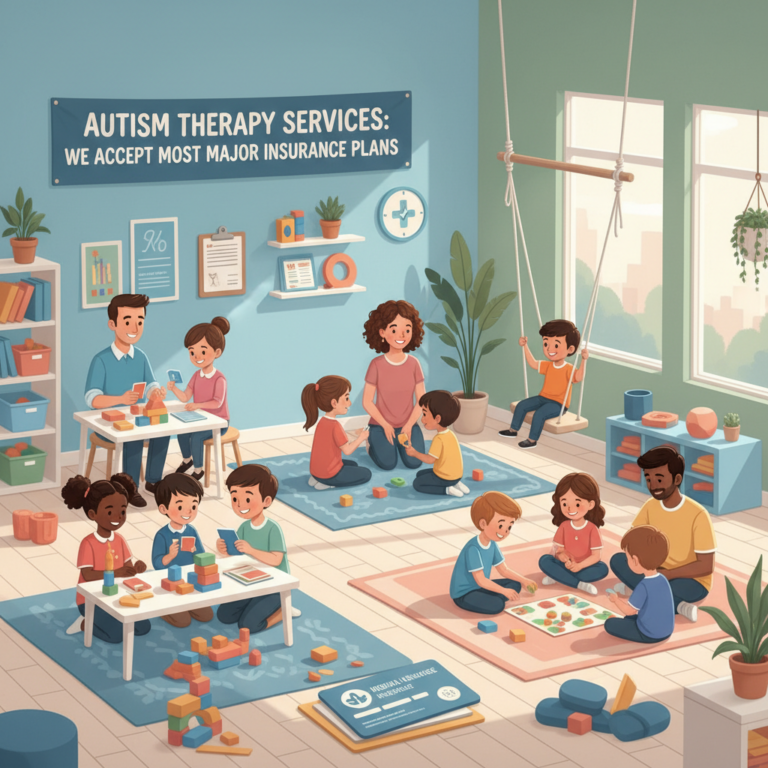
Many applied behavior analysis centers, including ABA Centers of Pennsylvania, offer free consultations and insurance benefits assessments to help you understand your specific coverage and out of pocket responsibilities [9]. When you explore autism therapy insurance accepted options, you can ask providers to walk you through likely scenarios before committing to a schedule.
Bringing it all together: Choosing an ABA center that fits your family
You are not simply choosing a therapy. You are choosing people who will know your child well, spend many hours with them each week, and partner with you during a significant part of your family’s life.
As you evaluate an applied behavior analysis center, you can use these questions to guide your decision:
- Who will design and supervise my child’s aba therapy for autism, and what are their qualifications?
- How will you assess my child and develop an autism therapy plan development process with me?
- How do you incorporate speech, OT, and social skills therapy autism into your programs or coordinate with outside providers?
- What does your parent training look like, and how will I be involved day to day?
- How do you track progress, and how often will we review data and adjust goals?
- What safety protocols and environmental safeguards do you use?
- How do you support families with scheduling, transportation, and financial barriers?
When you find a center that can answer these questions clearly, respects your observations, and welcomes your participation, you are more likely to see therapy translate into meaningful outcomes at home, at school, and in the community.
With a thoughtful applied behavior analysis center, coordinated therapy support for autism, and your steady involvement, your child’s treatment can move from a set of appointments on the calendar to a comprehensive plan that builds skills, confidence, and independence over time.