Understanding autism therapy plan development
When your child is newly diagnosed with autism, the number of options can feel overwhelming. Autism therapy plan development is the process of turning all of those options into a clear, coordinated roadmap that fits your child and your family. The goal is not to follow a generic template. Instead, it is to build a personalized plan that supports learning, communication, daily living skills, and social connection over time.
Effective autism therapy plans usually combine behavioral therapies, speech and language support, occupational therapy, and structured social skills work. Early intervention, ideally in the toddler or preschool years, has the greatest impact because of how rapidly the brain is developing in those first years of life [1]. However, you can build a meaningful plan at any age.
Start with a comprehensive assessment
A strong autism therapy plan begins with a clear picture of your child today.
What a thorough assessment includes
You can expect your team to look at:
- Current communication skills, verbal and nonverbal
- Social interaction and play
- Daily living skills such as dressing, feeding, and hygiene
- Learning strengths and challenges
- Behavior patterns, including meltdowns, self‑injury, or aggression
- Sensory preferences and sensitivities
- Medical and mental health history
Board Certified Behavior Analysts (BCBAs) typically lead the behavioral side of assessment through interviews, structured tasks, and observation in different settings, such as home, clinic, or school [2]. This often includes a Functional Behavior Assessment that looks at what happens before, during, and after challenging behaviors so your team can understand why they occur [3].
Medical specialists, such as developmental pediatricians, child psychiatrists, or neurologists, may perform additional evaluations to identify co‑occurring conditions and clarify developmental levels [4]. These findings help you and your providers select therapies that match your child’s profile.
Why assessment quality matters
Good information at the start leads to more accurate goals and fewer trial‑and‑error interventions later. Assessment should also be ongoing. As your child acquires new skills or faces new demands, such as entering school, your team should update data and adjust the plan [3].
If you are beginning with behavioral services, you might explore an autism functional behavior assessment or more comprehensive autism behavioral intervention services to set this foundation.
Build a multidisciplinary team
Autism rarely involves a single area of need. That is why most autism therapy plans are built by a multidisciplinary team.
Core professionals in an autism therapy plan
Your child’s team may include:
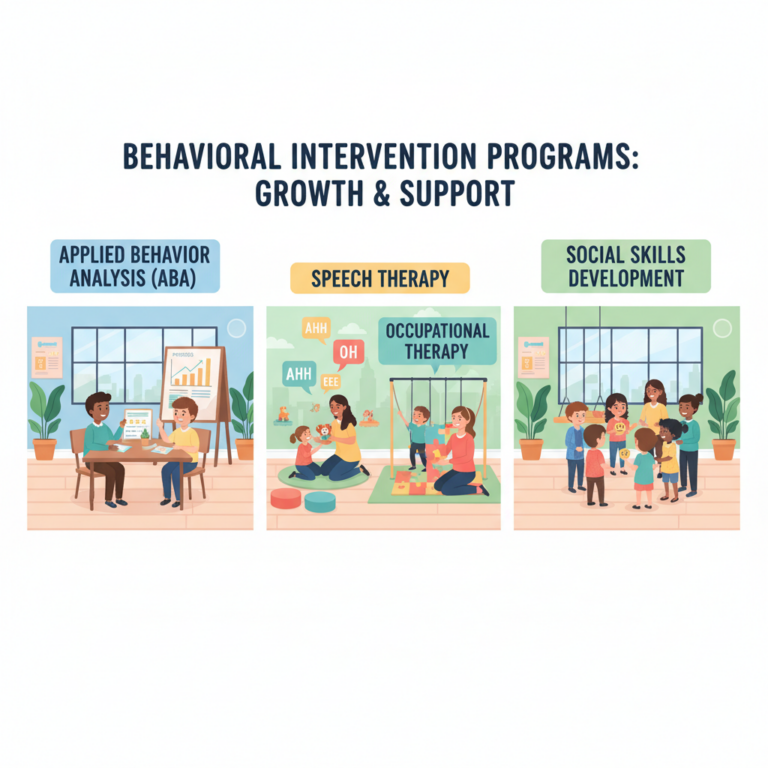
- A BCBA to design and supervise Applied Behavior Analysis (ABA) and other autism behavior therapy services
- A speech‑language pathologist for autism speech & language therapy
- An occupational therapist for occupational therapy autism and ot for children with autism
- A pediatrician or developmental specialist who oversees medical needs
- School staff such as special educators and school psychologists
Research supports a coordinated, evidence‑based, and multidisciplinary approach, especially when you aim to address autism symptoms and co‑occurring conditions together [5].
An integrated therapy autism services model can be helpful if you prefer to coordinate behavioral, speech, OT, and social skills support through a single clinic.
Set clear, realistic therapy goals
Once you understand your child’s starting point, you and your team can focus on specific changes you want to see.
Short‑term and long‑term goals
Short‑term goals target skills your child can work on in the next few months, such as:
- Using a simple phrase to request a favorite item
- Brushing teeth with help
- Playing side by side with a peer for a few minutes
Long‑term goals look ahead to developmental milestones and life stages. Examples might include:
- Joining a kindergarten classroom with appropriate supports
- Participating in a small social group
- Managing basic self‑care independently as a teenager
Clinicians recommend connecting short‑term goals to future milestones, so you are always building toward the next step rather than focusing on isolated skills [6].
Making goals measurable and meaningful
In ABA‑based autism therapy plan development, goals are written in clear, observable terms such as, “Your child will use a full sentence to request an item in 80 percent of opportunities across three sessions” [3]. This lets your team track progress and decide when to move to the next challenge.
Families play an essential role here. You can share what matters most to your daily life, such as smoother mealtimes, safer community outings, or fewer intense meltdowns. Those priorities help shape which behaviors and skills are addressed first.
Use ABA and behavioral intervention effectively
Behavioral therapies, especially ABA, are central for many children with autism. The aim is to build skills and reduce barriers to learning in a structured, supportive way.
What ABA focuses on
ABA is an evidence‑based approach that encourages useful behaviors and reduces those that are harmful or interfere with learning by using positive reinforcement, not punishment [7]. ABA treatment plans typically focus on:
- Communication and language
- Social interaction and play
- Functional daily living skills
- Problem behaviors such as aggression, self‑injury, or elopement
Techniques can include discrete trial training, naturalistic teaching, social stories, role‑playing, and structured reinforcement systems [8].
You might access these supports through an applied behavior analysis center or an aba therapy for autism program.
Key components of a strong ABA plan
According to payer guidelines summarized by experts, an effective ABA plan includes:
- Biopsychosocial background information
- A clear justification for ABA services
- Specific autism‑related goals
- A written behavior intervention plan
- Coordination with other providers
- Parent or guardian involvement
- Crisis and transition planning
- Defined discharge criteria and recommendations [9]
Behavior strategies should not simply remove challenging behaviors. Instead, they should teach safer, more functional alternatives by identifying triggers, preventing problems when possible, and reinforcing better responses [10].
If your child needs more intensive support around behavior, you can ask about behavioral intervention programs within broader autism therapy programs.
A well written behavior intervention plan explains not just what your child should stop doing, but exactly what they will learn to do instead, and how adults will respond in a consistent way.
Include speech and language therapy
Communication support is another core pillar in autism therapy plan development. Speech‑language therapy helps your child understand and use language more effectively, whether spoken, signed, or with communication devices.
What speech‑language therapy can address
Speech therapy for autism may target:
- Following directions and understanding questions
- Building vocabulary and sentence structure
- Using language for social purposes such as greeting, requesting, or sharing
- Speech clarity and sound production
- Alternative communication methods such as picture systems or speech‑generating devices
These skills are critical for success across home, school, and community settings [11].
You can often access these services through a dedicated speech therapy autism center or a clinic that offers autism speech & language therapy alongside other modalities.
Integrate occupational therapy and daily living skills
Occupational therapy is another essential piece of a comprehensive plan. OT focuses on helping your child participate in everyday activities at home, at school, and in the community.
How OT supports your child
Occupational therapists commonly work on:
- Fine motor skills, like writing, cutting, or buttoning
- Self‑care routines such as dressing, feeding, and grooming
- Sensory processing and regulation
- Visual motor and visual perceptual skills
- Attention and organization during tasks
OT helps your child practice concrete daily activities, for example brushing teeth or using utensils, as short‑term goals that build toward longer‑term independence [12].
Depending on your needs, you might seek occupational therapy autism services in a clinic or school, and explore specialized ot for children with autism programs.
Prioritize structured social skills development
Social interaction is often challenging for autistic children, yet it is also central to long‑term quality of life. A strong autism therapy plan should include explicit social skills work.
What social skills therapy looks like
Social skills supports may involve:
- Small‑group sessions that teach turn taking, sharing, and perspective taking
- Role‑playing common situations such as joining play, handling teasing, or working in groups
- Coaching during real‑life activities like recess, lunch, or community outings
Effective programs integrate social practice across environments, for example in classrooms, art and music, physical education, lunchrooms, and playgrounds [12]. Tools such as the Social Skills Improvement System rating scales can help your team measure and track progress over weeks and months [9].
You can look for social skills therapy autism services or autism social skills groups that match your child’s age and developmental level.
Make parent and caregiver training a core element
Your involvement is one of the most powerful drivers of progress. When you understand the strategies your child is learning, you can help them use those skills in everyday life.
Why parent training matters
Research and clinical guidance consistently highlight caregiver training as a crucial part of effective autism therapy plans [13]. Training might include:
- Learning how to respond consistently to behaviors
- Practicing ways to prompt language or social interaction
- Using visual supports or schedules at home
- Collecting simple data or notes to share with the team
Families who participate in planning, data collection, and practice at home tend to see stronger and more durable gains, partly because skills are reinforced in the settings that matter most [14].
If you are beginning this process, you may want to ask about parent training in aba within your chosen program or at an autism support therapy clinic.
Plan for early intervention and changing needs
Your child’s therapy plan is not static. It should evolve along with their age, skills, and circumstances.
Early intervention focus
When services begin in infancy or toddlerhood, efforts typically center on:
- Eye contact and joint attention
- Early language and play
- Basic self‑help skills
Delivering targeted interventions in the first two years of life is associated with better outcomes in core areas such as communication and social engagement [15]. Many families benefit from early intervention behavioral therapy that integrates home, clinic, and sometimes community settings.
Adapting goals across the life span
As your child grows, goals and methods should shift to reflect new demands, such as classroom learning, friendships, community safety, and eventually work and independent living. Expert guidelines recommend a life‑cycle based approach that revisits priorities at each stage so your child can demonstrate their strengths and maintain emotional stability over time [16].
Long‑term planning within your autism therapy plan may consider education options, employment pathways, living arrangements, and ongoing support needs [17].
Use data and collaboration to guide adjustments
Ongoing progress monitoring ensures that your child’s therapy stays responsive rather than routine.
Data‑driven decision making
In ABA and related services, therapists collect data during sessions on skill acquisition and behavior outcomes. BCBAs then review this information regularly to decide whether an approach is working or needs modification [2]. Visual tools like graphs can help you see trends over time.
If progress stalls, your team can adjust prompts, reinforcement, environments, or even the goals themselves. Continuous evaluation and adaptation are central parts of individualized autism therapy plan development [18].
Coordinating across settings
Children spend time in many places, including home, school, and community activities. Your therapy plan should encourage regular communication between providers, such as BCBAs, speech‑language pathologists, occupational therapists, physicians, and educators. This coordination helps ensure that strategies do not conflict and that skills are practiced consistently [19].
A clinic that offers broad therapy support for autism or integrated autism therapy programs can sometimes simplify this communication.
Considering insurance and access
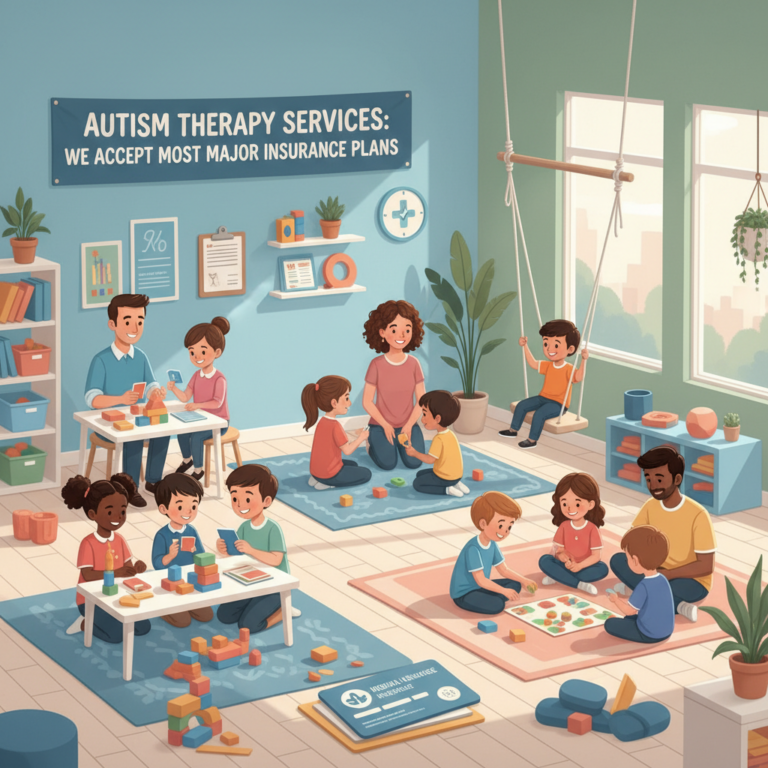
Finally, practical issues like insurance coverage and scheduling matter. When you meet with providers, you can ask about autism therapy insurance accepted and how they help families navigate authorizations. Some organizations also support providers with treatment plan writing and insurance processes to reduce the risk of denied claims [9].
Moving forward with your child’s therapy plan
Autism therapy plan development is an ongoing process, not a one‑time document. You begin with a detailed assessment, gather a multidisciplinary team, set clear and meaningful goals, and combine behavioral, speech, occupational, and social skills interventions that fit your child. You stay involved as a trained partner, use data to adjust course, and revisit priorities as your child grows.
If you are ready to take the next step, you might explore an autism support therapy clinic, a specialized applied behavior analysis center, or a program that offers integrated therapy autism services. With a thoughtful, individualized plan in place, you can help your child build skills, confidence, and independence over time.
References
- (Cleveland Clinic, Mayo Clinic)
- (Perfect Pair ABA, Autism Learning Partners)
- (Perfect Pair ABA)
- (Mayo Clinic, Journal of the Korean Academy of Child and Adolescent Psychiatry)
- (Journal of the Korean Academy of Child and Adolescent Psychiatry, Mayo Clinic)
- (Hopebridge)
- (Cleveland Clinic)
- (Advanced Autism Services, Your Missing Piece)
- (Your Missing Piece)
- (Autism Learning Partners)
- (Cleveland Clinic, Spero Academy)
- (Spero Academy)
- (Cleveland Clinic, Perfect Pair ABA, Autism Learning Partners)
- (Perfect Pair ABA, Advanced Autism Services)
- (Spero Academy, Journal of the Korean Academy of Child and Adolescent Psychiatry)
- (Journal of the Korean Academy of Child and Adolescent Psychiatry)
- (Mayo Clinic)
- (Advanced Autism Services)
- (Mayo Clinic, Your Missing Piece)