When your child is first diagnosed, the world of behavioral intervention programs can feel overwhelming. There are acronyms, different therapy models, and many strong opinions about what you “should” do. You may be asking yourself how to choose the right mix of supports and how to know if a program is really working for your child.
This guide is designed to help you understand behavioral intervention programs, especially for autism, so you can make confident, informed choices about ABA, speech, occupational, and social skills therapies for your child.
Understanding behavioral intervention programs
Behavioral intervention programs are structured plans that use what we know about learning and behavior to help children build new skills and reduce challenging behaviors. In autism care, these programs often sit at the center of a larger network of therapy support for autism.
Instead of focusing only on what a behavior looks like, effective behavioral intervention looks at why the behavior is happening. A Behavior Intervention Plan, or BIP, is a written, function-based plan that targets the reasons a challenging behavior occurs, and it focuses on teaching positive replacement behaviors rather than just describing the problem behavior itself [1].
For your child, that means a good behavioral program will ask questions like:
- What is your child trying to communicate with this behavior?
- What happens right before and right after the behavior?
- What new skills can you teach so your child has a more effective way to get their needs met?
This kind of approach is especially important for children with autism, whose behavior is often a form of communication about frustration, fear, sensory overload, or a need for connection [2].
Why early intervention matters
You may have already heard that early intervention is important. Research supports this, especially for young children with autism. Early, structured, positive behavior support and consistent communication between school and families can significantly change the trajectory for young students with behavior challenges, improving both academic and social outcomes over time [2].
Early autism behavioral intervention helps your child:
- Build core communication and social skills.
- Prevent challenging behaviors from becoming more entrenched.
- Take advantage of brain development during early childhood, when learning is especially rapid.
Programs like early intervention behavioral therapy are designed with these goals in mind. They focus on teaching foundational skills such as joint attention, following simple directions, using basic communication, and participating in routines at home and in preschool.
Core components of effective autism behavioral programs
Not all behavioral intervention programs are the same. However, strong programs tend to share some key elements that you can look for as a parent.
Clear, observable behavior goals
Effective behavioral programs start by clearly defining the behaviors they are targeting. This means you and the team agree on exactly what counts as the behavior of concern, how often it happens, and in what situations. Experts recommend using operational definitions that include intensity, frequency, and context so that everyone observing your child can identify the behavior in the same way [1].
Instead of a vague goal like “be less aggressive,” you might see:
“When upset, your child will use a break card or simple phrase to request a break in 80 percent of observed opportunities, reducing instances of hitting others to fewer than two times per week.”
This level of clarity makes it much easier to track progress and adjust the plan.
Data-driven decisions
You want your child’s therapy program to be based on more than opinion. According to the U.S. Department of Education’s What Works Clearinghouse, effective behavioral interventions routinely collect and analyze data about behavior and learning, then use that information to guide decision making [3].
In practice, that can look like:
- Recording how often a behavior happens.
- Tracking how quickly your child learns a new skill.
- Regularly reviewing graphs and progress reports with you.
Digital behavior management tools can make this process more efficient by allowing real-time data collection and quick adjustments to plans when patterns and triggers are identified [3].
Functional behavior assessment and BIPs
Before creating or changing a behavior plan, many providers complete a functional behavior assessment, or FBA. An autism functional behavior assessment looks at what happens before a behavior, what the behavior looks like, and what happens after. This is often called the Antecedent-Behavior-Consequence or ABC model.
From there, your team can build a Behavior Intervention Plan that:
- Hypothesizes the function of the behavior, such as escape, attention, access to something, or sensory needs.
- Designs antecedent strategies, like visual supports or environmental changes, to prevent problems and make success easier.
- Specifies how to respond after behaviors, focusing on safety and avoiding accidentally rewarding challenging behavior, as well as how to teach and reinforce replacement behaviors [1].
A good BIP will be shared with you, your child’s teachers, and any therapists so that everyone responds in a consistent way, which reduces confusion and intermittent reinforcement that can worsen behavior over time [1].
Multi-tier and collaborative supports
In school, behavioral intervention is often framed within a Multi-Tiered System of Supports (MTSS) or Positive Behavioral Interventions and Supports (PBIS). These frameworks provide different levels of support based on need, and they are increasingly common in K–12 settings [4].
At home and in clinics, you will see a similar idea: universal supports every child receives, targeted supports for children with emerging challenges, and more intensive, individualized programming for children with significant needs.
The common thread is teamwork. Effective behavioral intervention programs for autism rely on close collaboration among you, your child’s therapists, and educators so that strategies are consistent across settings.
ABA: The backbone of many behavioral programs
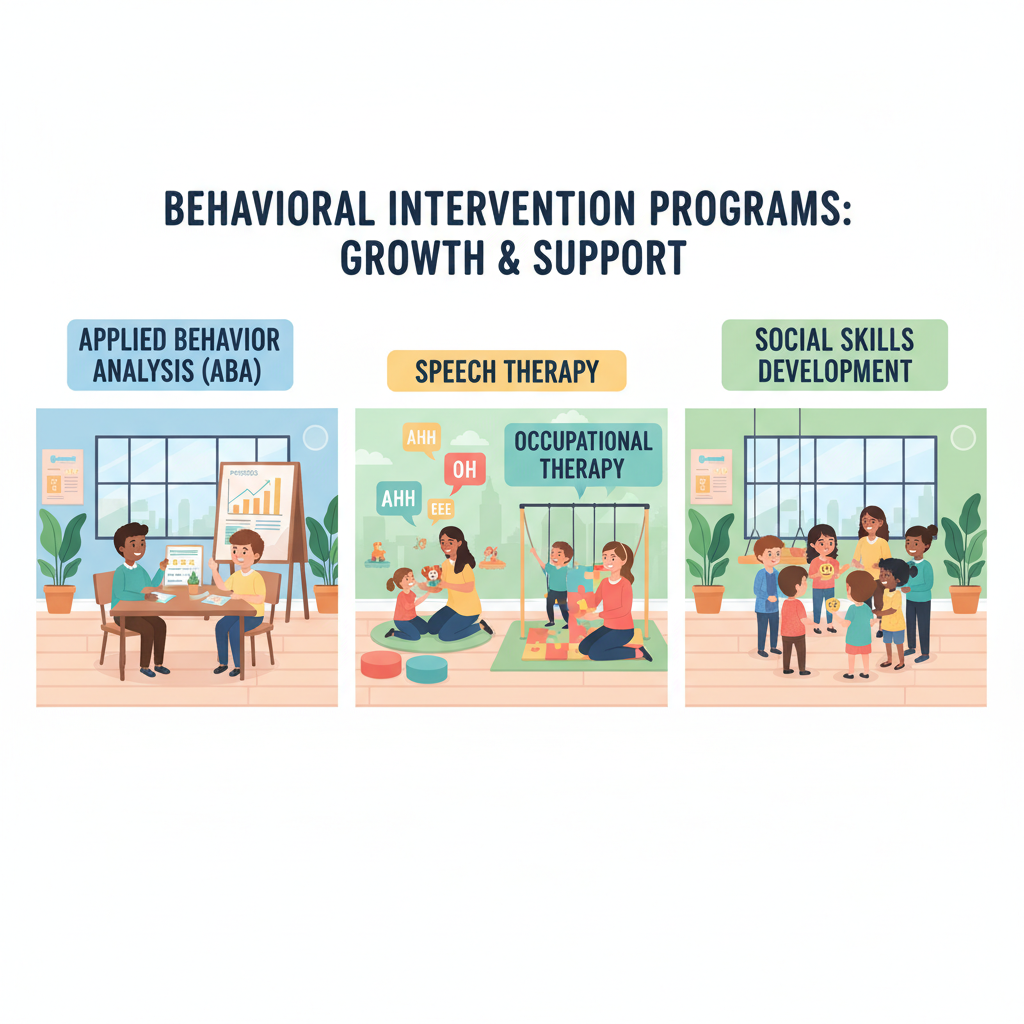
Applied Behavior Analysis, or ABA, is one of the most widely used behavioral intervention models for children with autism. ABA is not a single program. It is a set of principles and techniques used to teach new skills and reduce behaviors that interfere with learning and daily life.
In practice, aba therapy for autism might include:
- Breaking complex skills into smaller, teachable steps.
- Providing clear instructions and prompts.
- Using reinforcement that is meaningful to your child.
- Systematically fading adult support to build independence.
Many families access these supports through an applied behavior analysis center or in-home autism behavior therapy services. Early, consistent ABA has been shown to improve communication, adaptive skills, and social engagement for many children, especially when combined with other therapies.
Parent training in ABA
Your role in any behavioral program is critical. You spend more time with your child than any therapist, and you know your child best. Quality ABA programs often include parent training in aba so you can:
- Learn how to respond consistently to your child’s behavior.
- Practice using visuals, schedules, and reinforcement at home.
- Understand how to generalize skills from therapy sessions to everyday life.
This type of partnership helps ensure that gains made in therapy are maintained and expanded in real-world situations.
Speech therapy as part of behavioral intervention
Behavioral intervention programs are most effective when they consider communication. A child who cannot effectively communicate is much more likely to use challenging behavior to get needs met. That is why many families combine ABA with speech and language supports through a speech therapy autism center or autism speech & language therapy.
Speech-language pathologists support your child by:
- Building functional communication, whether through spoken words, signs, pictures, or devices.
- Expanding vocabulary and sentence structure.
- Supporting social communication skills such as turn taking, asking for help, or joining play.
Positive behavior interventions work best when educators and therapists focus on teaching and reinforcing the desirable behaviors they want to see, rather than only trying to stop disruptive behavior [2]. When your child has more ways to communicate, many challenging behaviors become less necessary.
Occupational therapy and sensory support
Occupational therapy, or OT, is another core component of many autism therapy programs. An occupational therapist looks at the daily tasks your child needs to perform and the sensory world your child moves through.
Through occupational therapy autism or more targeted ot for children with autism, your child may work on:
- Fine motor skills such as writing, cutting, or buttoning.
- Sensory regulation strategies, like deep pressure, movement breaks, or calming tools.
- Daily living skills such as dressing, feeding, and hygiene.
- Tolerating changes in routine and transitions.
Because many challenging behaviors are linked to sensory overload or difficulty with everyday tasks, OT often reduces behavior incidents simply by helping your child feel more comfortable and capable.
Social skills therapy and peer connections
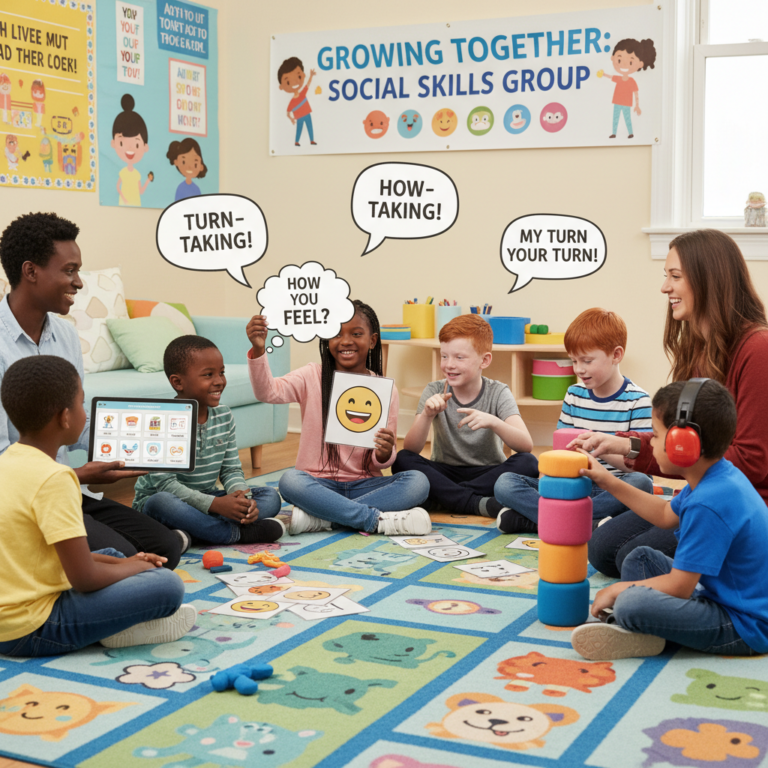
Social understanding rarely develops automatically for children with autism. Behavioral intervention programs often include specific social skills supports, such as social skills therapy autism or autism social skills groups.
These services may focus on:
- Reading facial expressions and body language.
- Understanding personal space and friendship boundaries.
- Practicing conversation skills in a safe, structured environment.
- Playing cooperatively and solving small conflicts.
Research on school-wide PBIS shows that consistent positive behavior support can help children improve prosocial behaviors and emotion regulation over several years [5]. Small group social-skills work uses similar ideas on a more individualized level, with explicit teaching, role play, and feedback.
Building an integrated therapy plan
Because autism affects communication, behavior, sensory processing, and social connection, most children benefit from a coordinated plan that pulls together several therapies. You might access these supports through an autism support therapy clinic that offers integrated therapy autism services.
When you look at potential providers, ask how they:
- Coordinate between ABA, speech, OT, and social skills.
- Develop and update an autism therapy plan development document.
- Share data and progress reports across disciplines and with you.
- Involve you in goal setting and review.
A strong integrated plan uses common goals, shared strategies, and consistent reinforcement systems so your child is not experiencing one set of rules in one therapy and a completely different approach in another.
Considering insurance and access
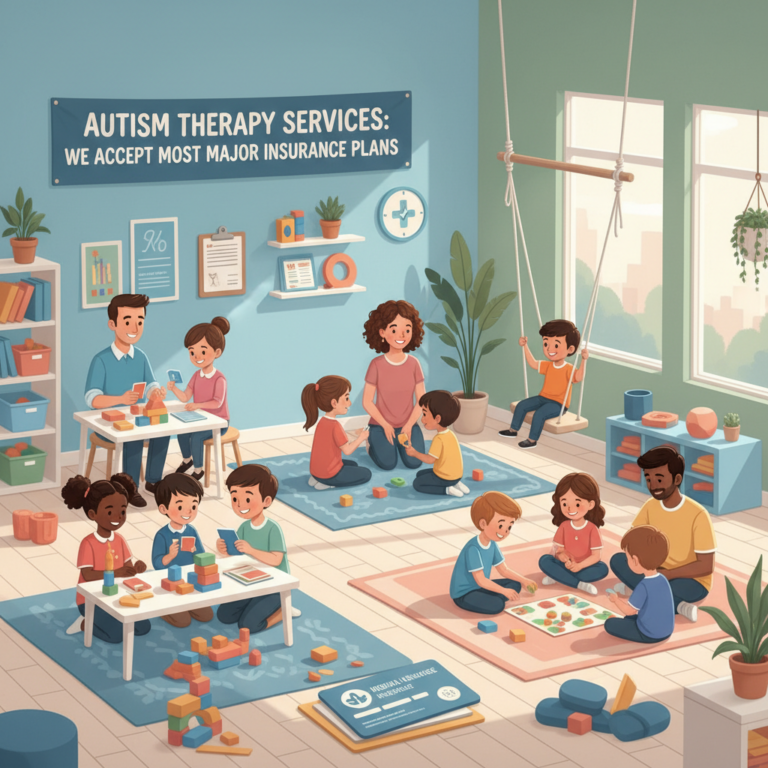
You may also need to consider what your insurance covers and how to maximize those benefits. Many families look for programs where autism therapy insurance accepted is clearly explained, including:
- Which therapies are covered and how many hours per week.
- Requirements for prior authorization or updated evaluations.
- Any limits related to setting, such as home, clinic, or school.
A transparent clinic will walk you through these details, help with paperwork, and adjust scheduling so your child receives the most essential services within your coverage.
How to evaluate behavioral intervention programs
Once you understand the different components, the question becomes how to choose among specific programs. You can use the following factors to guide your decision.
Look for programs that combine evidence-based methods with a strong, respectful relationship with your child and your family.
Program quality and evidence base
Ask potential providers:
- What evidence-based practices do you use?
- How do you collect and share data about my child’s progress?
- How often do you adjust goals based on that data?
Evidence-based programs use approaches that have been validated by research, such as ABA strategies and positive reinforcement, and they monitor outcomes in a structured way [6].
Individualization and cultural responsiveness
Your child is not a checklist of symptoms. Strong behavioral programs individualize supports based on your child’s:
- Strengths and interests.
- Communication level.
- Family culture, language, and values.
- Co-occurring conditions such as ADHD or anxiety.
Behavioral interventions in schools are most effective when they incorporate student development stages and cultural responsiveness, and the same is true in clinical settings [3].
Family involvement and communication
You should feel welcomed as part of the team. Ask how often you will:
- Receive written updates and data summaries.
- Meet with therapists to review progress.
- Be taught strategies to use at home.
Open communication ensures that what is working in therapy is supported in your daily routines, and that your concerns are addressed quickly.
Safety, respect, and values
Finally, pay attention to how staff speak about children and behavior. Effective BIPs include strategies for de-escalation, safety, and avoiding reinforcement of challenging behavior immediately after it occurs [1]. However, these strategies should always be grounded in respect and a belief that your child is doing the best they can with the skills they have right now.
You can ask:
- How do you handle meltdowns or aggressive behavior?
- How do you ensure my child’s emotional and physical safety?
- How do you support my child’s autonomy and preferences?
If the answers align with your values and you feel heard, that is a strong sign you have found a good fit.
Taking your next step
Choosing behavioral intervention programs for your child is not a one-time decision. It is an ongoing process of observing your child, partnering with professionals, and adjusting supports as needs change.
You might begin with:
- A comprehensive evaluation and autism behavioral intervention consult.
- Enrolling in autism behavior therapy services that integrate ABA with autism speech & language therapy and ot for children with autism.
- Adding autism social skills groups as your child becomes ready for more peer interaction.
Throughout this journey, remember that all behavior is communication. Your child is not “being difficult.” They are telling you what is hard for them right now. With the right combination of structured, positive behavioral supports and compassionate, coordinated therapies, you can help your child build the skills they need to participate more fully at home, at school, and in the community.