What autism behavior therapy services are and how they help
When your child is first diagnosed with autism, you are often handed a long list of recommendations that can feel overwhelming. Autism behavior therapy services are meant to turn that list into a clear, coordinated plan that supports your child at home, at school, and in the community.
Behavior-focused therapies, especially Applied Behavior Analysis (ABA), have the strongest research base for treating core symptoms of autism and are widely used in schools and clinics across the United States [1]. These services are usually combined with speech therapy, occupational therapy, and social skills work so your child can build communication, independence, and confidence over time.
In this guide, you explore the main types of autism behavior therapy services available, what actually happens in sessions, how they work together, and how to decide which supports are right for your family.
Understanding ABA and behavioral intervention
Behavioral therapy is often the backbone of autism treatment plans. You may hear it called ABA, behavioral intervention, or autism behavior therapy services. All of these terms point to science-based strategies that encourage helpful behaviors and reduce behaviors that get in the way of learning and daily life.
What Applied Behavior Analysis (ABA) does
Applied Behavior Analysis is a structured approach that focuses on what your child does, why they do it, and how to help them build more effective skills. ABA is considered one of the most evidence-supported treatments for autism [1] and is commonly recommended early in a child’s life.
During ABA therapy, a Board Certified Behavior Analyst (BCBA) completes an assessment, identifies your child’s strengths and needs, and creates an individualized plan with clear, measurable goals [2]. ABA can help your child:
- Communicate wants and needs more clearly
- Learn self-care and daily living skills
- Handle changes and transitions with less distress
- Reduce behaviors that are unsafe or disrupt learning
- Build early play and social interaction skills
Many families explore an applied behavior analysis center or start with aba therapy for autism after diagnosis so they have professional support in place quickly.
How ABA sessions work in practice
ABA programs use a variety of methods that can be tailored to your child’s age, personality, and learning style. Some commonly used formats include:
- Discrete Trial Training (DTT), which teaches skills in very small, structured steps with clear instructions and immediate reinforcement
- Pivotal Response Treatment (PRT), which focuses on key “pivotal” areas like motivation and response to cues in more natural play settings [1]
- Naturalistic or play-based approaches that embed goals into everyday routines and favorite activities
- The Early Start Denver Model (ESDM) for very young children, ages 12 to 48 months, which uses play and shared attention to improve language and social skills in natural settings [1]
Sessions might happen at home, in a clinic, or in the community. A typical appointment includes practicing target skills, using prompts when needed, and then fading those prompts as your child becomes more independent. Progress is tracked and measured over time so you can see what is improving and where the plan needs to change.
If you are looking for a structured, data-driven approach, you can explore autism behavioral intervention and behavioral intervention programs to understand what a full treatment plan could look like.
Why early and consistent ABA matters
Research suggests that delivering ABA for more than 20 hours per week in the first few years of life can lead to large developmental gains and reduce a child’s need for support later on [2]. Many children receive between 10 and 40 hours of therapy per week for up to three years [3].
Autism therapies tend to have the greatest long-term impact when started before age 3 because the brain is especially open to change in early development, although people of any age can still benefit [4].
Early, consistent treatment does not mean you must commit to a single model forever. It means your child is regularly practicing important skills with support while you and the team adjust the plan as your child grows.
Speech and language therapy for autism
Speech and language therapy is one of the most common services for autistic children and is a key part of autism behavior therapy services. Speech-language pathologists support your child in communicating effectively, whether that is with spoken language, gesture, pictures, or devices.
You can learn more about how this looks in practice through resources like autism speech & language therapy and by connecting with a specialized speech therapy autism center.
What speech therapists work on
A speech-language pathologist tailors therapy to your child’s current communication level. That may include:
- Building early communication, such as eye contact, joint attention, and turn taking
- Expanding vocabulary and sentence structure
- Teaching your child how to ask for help, refuse, or share preferences appropriately
- Improving clarity of speech so others understand your child more easily
- Using visual supports, picture exchange systems, or speech-generating devices when needed
Speech therapy is not just about words. It supports social communication, understanding directions, and using language in flexible, meaningful ways in real life.
Communication approaches beyond spoken words
For many autistic children, communication starts before or outside of spoken language. Therapists may introduce:
- Gesture and sign for basic needs
- Visual schedules to show what will happen next
- Picture exchange systems so your child can hand over a picture to request something
- Tablet-based communication apps
According to the CDC, developmental therapies such as speech and language therapy help individuals with autism learn to communicate verbally or through signs, pictures, or electronic devices [1].
The goal is not to replace speech if your child can develop it, but to give them an effective way to communicate now so frustration and challenging behaviors decrease.
Occupational therapy and daily living skills
Occupational therapy (OT) is another major part of autism behavior therapy services. OT focuses on helping your child participate more comfortably and independently in everyday activities, from getting dressed to playing with peers.
If you want a deeper dive, you can explore occupational therapy autism and ot for children with autism to see common goals therapists target.
How OT supports independence
Occupational therapists look at what daily tasks your child needs or wants to do, then break those tasks into manageable steps. OT can help your child:
- Dress, bathe, brush teeth, and use the bathroom more independently
- Use utensils, write, or type
- Tolerate grooming activities like haircuts and nail trimming
- Participate in classroom routines, from circle time to writing assignments
- Build play skills, such as using toys in different ways or playing alongside peers
The CDC notes that OT for autistic individuals aims to teach daily living skills so people can live as independently as possible [1].
Addressing sensory and motor challenges
Many autistic children experience sensory differences that affect behavior and participation. OT often includes strategies for:
- Coping with noise, light, or touch that feels overwhelming
- Using movement and “sensory breaks” to stay regulated
- Improving balance, coordination, and body awareness
Physical therapy may also be part of your child’s plan, especially if they need support with gross motor skills, gait, or coordination related to learning and play [4].
By combining daily living skills, sensory strategies, and motor work, OT helps your child feel more comfortable in their body and their environment.
Social skills therapy and peer interaction
Social skills challenges are a core part of autism, and they often become more obvious as your child grows. Social skills therapy provides a structured space for your child to practice reading social cues, sharing, taking turns, and handling conflict with support.
You might find programs listed as social skills therapy autism or autism social skills groups. These services are especially helpful once your child is in preschool, elementary, or middle school.
What happens in social skills groups
Social skills therapy can be delivered one-on-one, but group settings give your child real-time practice with peers. Sessions often include:
- Direct teaching about a specific skill, like starting a conversation or joining a game
- Role play, modeling, and use of visuals to show what the skill looks like
- Guided practice during games or structured activities
- Feedback from the therapist and peers about what worked well and what to try differently
Group social skills intervention, sometimes called GSSI, has been shown to help autistic adolescents and young adults build social confidence through instruction, modeling, visuals, and role play [4].
Connecting social skills to behavior
Social difficulties can show up as behavior challenges. For example, your child might:
- Walk away or shut down when they feel overwhelmed in groups
- Interrupt or talk about only one interest, which can cause peer conflict
- React with aggression when a game does not go their way
By addressing the underlying social understanding, social skills therapy can reduce these behavior issues and help your child experience more success with friends, classmates, and siblings.
Integrated autism therapy programs
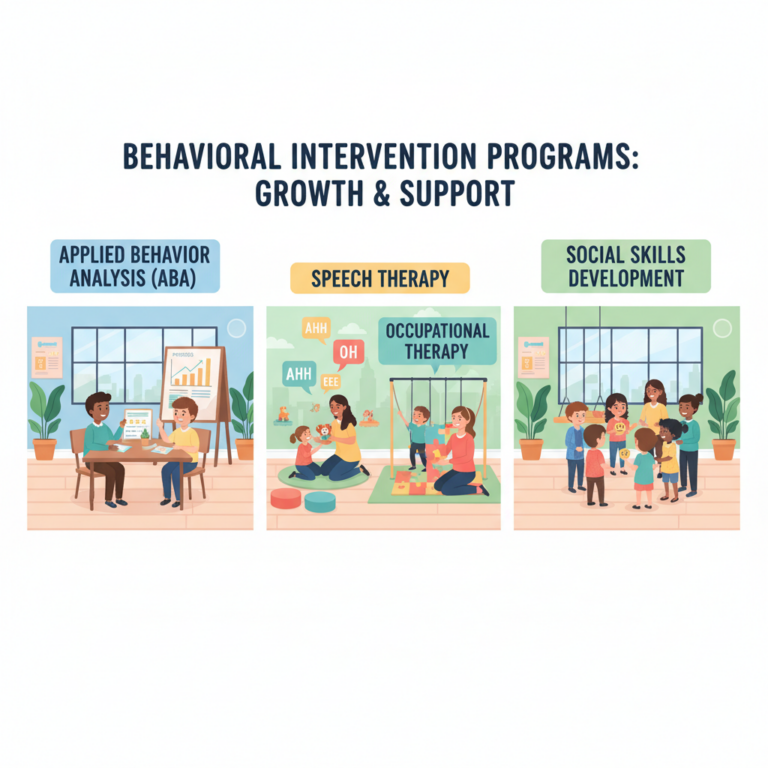
Although it helps to understand each service separately, your child benefits most when autism behavior therapy services are coordinated through a comprehensive program. Integrated care builds communication, daily living skills, behavior support, and social development into one plan.
You can learn more about how this coordination works through resources such as autism therapy programs, integrated therapy autism services, and your local autism support therapy clinic.
What an integrated plan can look like
A well designed program might combine:
- ABA or other autism behavioral intervention as the core behavior support
- Speech and language work through a specialized speech therapy autism center
- Daily living and sensory work with occupational therapy autism
- Structured peer practice through social skills therapy autism or autism social skills groups
The team shares information and regularly updates a unified autism therapy plan development document so everyone is working toward the same goals.
When therapies are integrated instead of isolated, your child is practicing the same core skills in different places, with different people, and in different ways. This repetition across environments helps new skills become part of everyday life.
Early intervention and school readiness
Many families begin with early intervention behavioral therapy soon after diagnosis. Early programs typically focus on:
- Basic communication and imitation
- Shared attention and early play
- Following simple directions
- Tolerating routines and transitions
As your child approaches preschool or kindergarten, integrated services can shift toward classroom readiness, peer interaction, and functional independence. Programs like the Early Start Denver Model center developmentally appropriate learning through play and social exchanges in natural settings [1].
Integrated care can also include collaboration with your child’s school team so strategies are consistent across home, clinic, and classroom.
Parent and caregiver involvement
Your participation is one of the most powerful parts of autism behavior therapy services. Therapists see your child for a few hours per week. You live the rest of it with them.
Parent training models, including parent training in aba, give you practical tools you can use in daily routines. Over time, this can make a bigger difference than any single therapy session.
How you are included in the process
Across ABA, speech, OT, and social skills services, you can expect:
- Education on why certain strategies are being used
- Coaching on how to respond to specific behaviors at home
- Practice sessions where you try techniques with your child while the therapist supports you
- Regular progress reviews and room for your input on goals
Behavioral therapy for autism today focuses on positive reinforcement, not punishment, to support desired behaviors and reduce behaviors that may be unsafe or disruptive [4]. Parent involvement helps ensure those reinforcement strategies are used consistently.
Many clinics also provide structured therapy support for autism resources, such as parent workshops or individual coaching.
Functional behavior assessment and home strategies
If your child has behavior that is especially intense or confusing, a autism functional behavior assessment can help. A BCBA or behavior specialist will:
- Observe your child in different settings
- Identify what seems to trigger the behavior and what follows it
- Clarify the function of the behavior, for example, escape, attention, access to items, or sensory input
- Develop a plan to teach safer, more effective replacement skills
Once the function is clearer, you can adjust routines and responses in ways that make sense for your family and are realistic to maintain.
Practical considerations: time, cost, and access
Getting the right autism behavior therapy services in place often involves practical questions about schedules, funding, and long term planning. It can help to understand what to expect so you can advocate effectively for your child.
Therapy intensity and duration
Many children receive a combination of 10 to 40 hours of ABA and other supports each week for up to three years, particularly in the early stages [3]. ABA delivered for more than 20 hours per week before age 4 has been linked to major developmental gains and reduced need for services later on [2].
Not every child needs or can tolerate the same intensity. A good provider will adjust hours over time based on your child’s progress, stamina, and your family’s capacity.
Cost, insurance, and financial help
ABA and related therapies can be expensive. Board certified ABA therapists often charge around 120 to 150 dollars per hour, which can add up to tens of thousands of dollars per year without coverage [5]. Autism Parenting Magazine notes that therapy and related medical appointments can total around 17,000 to 21,000 dollars yearly for many families [3].
Support options can include:
- Health insurance plans and Medicaid that cover ABA and related therapies, often reducing your costs to deductibles and copays
- State funding programs and waivers, such as the Katie Beckett waiver and other regional initiatives, which may offset a large portion of therapy costs [5]
- School funded therapy services through special education once assessments are completed [3]
- Grants and scholarships, including ACT Today!, CARE Family Grant, Chrysalis Fund, First Hand, FODAC, ASDF Social Skills Camp, and Small Steps in Speech [5]
- Employer based assistance or payment plans through clinics, which can sometimes bring hourly rates down significantly [3]
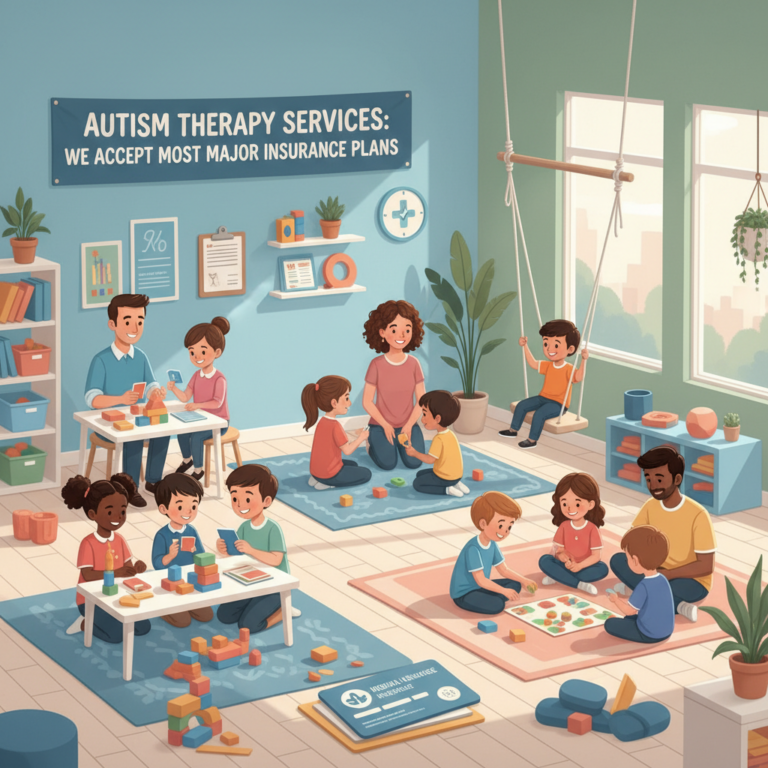
When you contact an autism therapy insurance accepted provider, ask for a benefits check. Many clinics will help you understand your coverage and the likely out of pocket costs before therapy begins.
Choosing and coordinating services
As you evaluate options, it can help to use a single clinic or coordinated network that offers multiple services under one roof, such as:
- ABA or autism behavioral intervention
- Autism speech & language therapy
- Ot for children with autism
- Autism social skills groups
This integrated setup, often available through an autism support therapy clinic or structured integrated therapy autism services, can simplify scheduling and ensure your child’s team is communicating regularly.
Moving forward with therapy supports
Autism behavior therapy services are not about changing who your child is. They are about giving your child practical tools for communication, independence, and connection, and giving you support so you are not carrying everything alone.
As you move forward, you can:
- Start with a comprehensive evaluation and autism therapy plan development to clarify priorities
- Explore autism therapy programs that combine ABA, speech, OT, and social skills work
- Ask about parent training in aba so you can use consistent strategies at home
- Check that providers accept your insurance through an autism therapy insurance accepted review
- Stay open to revisiting and adjusting your child’s plan as they grow
With informed choices and coordinated support, you can build a therapy plan that respects your child’s individuality while helping them develop the skills they need to thrive.