Behavioral support for teens with autism can be a powerful way to help you move toward more independence, stronger relationships, and a future that feels like your own. During adolescence, you may notice that emotions feel bigger, routines change more often, and expectations at school and home keep growing. Behavioral strategies can give you structure and tools so that these changes feel more manageable and less overwhelming.
In this guide, you will explore how behavioral support works, how it connects with life skills and transition planning, and how specialized tracks can help you move toward college, work, or other adult goals at a pace that works for you.
Understanding behavioral support in your teen years
Behavioral support for teens with autism focuses on what happens before and after a behavior so that you can understand why it is happening and what might help it change. Behavioral approaches are some of the most evidence based treatments for autism and are widely used in schools and treatment clinics across the United States as of 2024 [1].
You might hear terms such as Applied Behavior Analysis, social skills training, or functional behavior assessment. All of these are different ways to look at your behavior in context rather than judging you for it. The goal is not to make you someone you are not. The goal is to reduce stress, increase your choices, and build skills that matter to you.
When you work with a behavioral provider, you usually:
- Identify behaviors that are getting in your way
- Figure out what triggers those behaviors and what keeps them going
- Learn replacement skills that serve the same purpose in a safer or more effective way
- Practice new skills across home, school, and community settings
When behavioral support is done well, you are not just being managed. You are being taught tools that you can eventually use on your own, which is especially important as you move toward adulthood and more independence.
Core therapies used in behavioral support
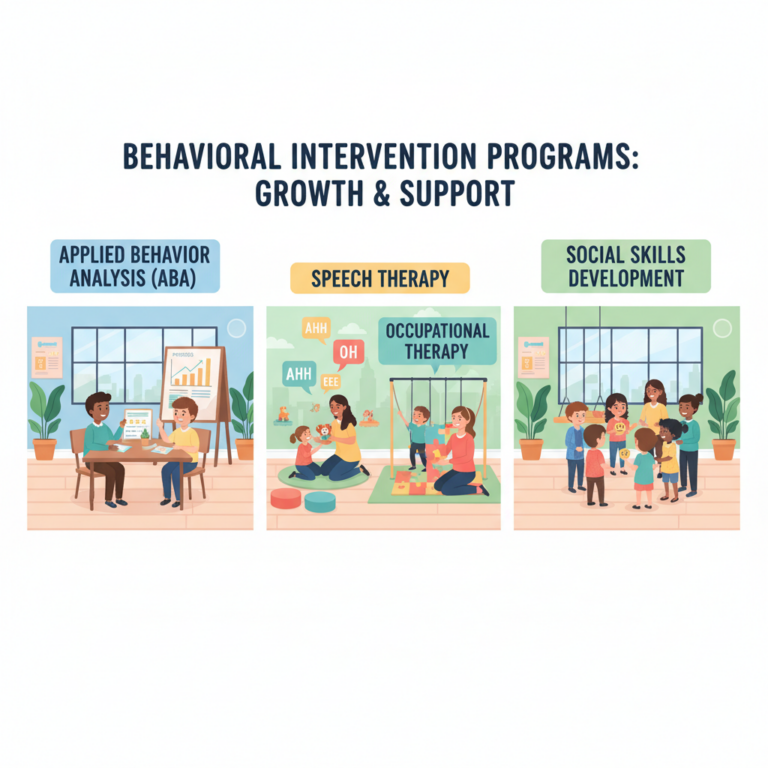
Many types of behavioral support for teens with autism are based on Applied Behavior Analysis, or ABA. ABA encourages desired behaviors and discourages behaviors that are unsafe or that block your goals. Progress is usually tracked and measured so that you and your team can see what is actually working over time [1].
ABA can look different for teens than it does for young children. It is often more collaborative and more connected to your interests, like using your favorite activities, music, or technology as reinforcement. Two common ABA based teaching approaches include:
- Discrete trial training, which breaks skills into small steps and gives clear practice with rewards for correct responses [1]
- Pivotal response training, which is more play based and focuses on motivation, self management, and key “pivotal” skills that affect many areas at once [1]
In addition to ABA, you may be offered:
- Social Skills Training, which has been shown to improve social responsiveness and social behaviors for adolescents with autism [2]
- Occupational therapy that targets everyday skills like dressing, grooming, and organizing materials so you can function more independently at home and school [1]
- Counseling or psychotherapy that focuses on anxiety, depression, or self esteem that often come up in the teen years
You might participate in individual sessions, group sessions, or a mix of both. Over time, the goal is for you to understand the strategies well enough that you can adapt them as your life changes.
Building emotional and behavior regulation
Teenagers with autism often experience more aggression, irritability, anxiety, social withdrawal, and sleep difficulties during adolescence, which makes behavioral management more complex compared to childhood [3]. This is not your fault. Hormones, new demands, and sensory overload can all play a part.
Behavioral support helps you break down emotional regulation into clear, learnable steps:
- Understanding what your body feels like when you are calm, uneasy, or close to a meltdown
- Spotting early warning signs such as clenching fists, headaches, or fast breathing
- Using coping strategies like deep breathing, sensory tools, movement breaks, or quiet time before things boil over
- Practicing what to do and say during disagreements, transitions, or stressful events
Your team might use tools such as visual scales, apps, or written scripts so that you can see your options in the moment. Communication strategies can also help, like learning phrases such as “I need a break,” “This is too loud,” or “Can we change the plan” so you can ask for what you need before behavior escalates [3].
Behavioral support also recognizes that sleep, sensory needs, and medical issues often affect your mood and behavior. For example, youth who sleep better often show stronger talking, social skills, and daily living skills, so your team may suggest you talk with a medical provider about sleep or other health concerns that may be contributing to behavior challenges [4].
Strengthening communication and social skills
The teen years are full of new social rules and expectations, from group projects to dating to social media. If you process information differently, this can feel confusing or exhausting. Behavioral support for teens with autism often includes targeted work on communication and social skills so that you can connect with others in ways that feel safe and authentic.
You might work on:
- Understanding social cues such as tone of voice, facial expressions, or personal space
- Starting and ending conversations in ways that feel comfortable to you
- Handling teasing, criticism, or conflict without shutting down or exploding
- Recognizing when someone is a safe friend and when someone is taking advantage of you
- Practicing self advocacy, including telling others your needs and boundaries
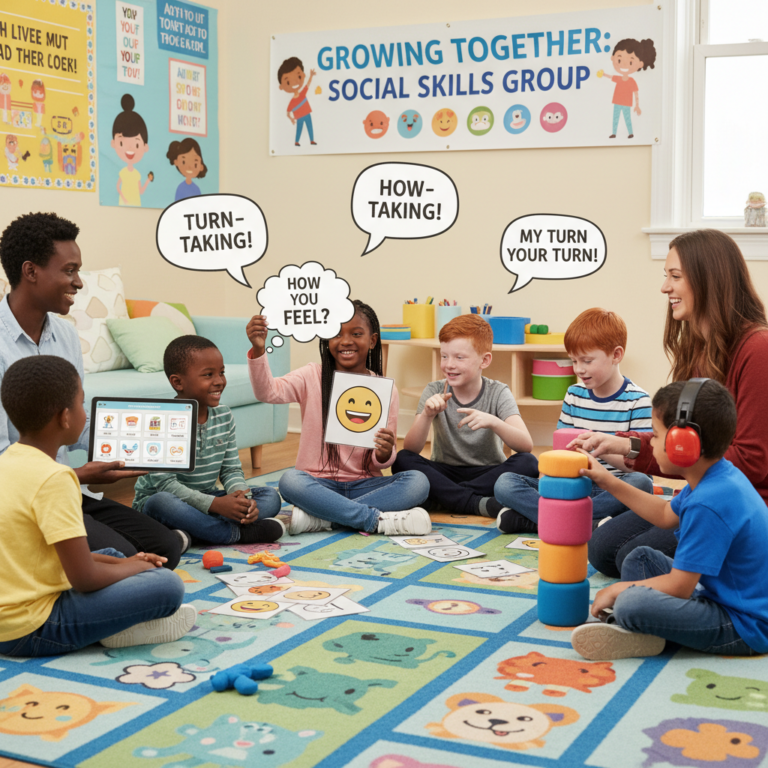
Social Skills Training programs show medium to large benefits for adolescents with autism in improving social responsiveness and social behaviors [2]. These programs are often run in small groups, which lets you practice in real time with peers and get feedback.
If face to face communication is hard, your plan might incorporate alternative methods such as texting, communication apps, or written notes to help you express frustration or ask for help, especially at home and school [3]. As you build confidence, you can gradually add more direct interactions at your own pace.
You can also look for programs that combine social growth with fun, like autism recreation and social programs or autism social maturity training. These experiences can help you practice new skills in relaxed, real world settings.
Mastering daily living and independent skills
Behavioral support is not only about reducing challenging behavior. It is also about teaching you the practical skills that allow you to live more independently. Occupational therapy and behavior based life skills programs can help you learn to manage:
- Personal care like showering, shaving, menstrual care, and dressing for the situation
- Household tasks like laundry, dishes, simple meal prep, or cleaning your room
- Community skills like using public transportation, ordering at a restaurant, or handling money
- Technology skills like using a calendar, managing passwords, and keeping track of assignments
Structured teaching, visual schedules, and step by step checklists can make these tasks more predictable. Visual schedules and choices among limited options give you more control and reduce frustration, which can improve your focus and behavior during tasks [5].
Programs such as an autism daily living skills program, autism independent living skills, or autism life skills training are designed to target exactly these areas. These services can be especially helpful if you are considering autism independent living programs in the future.
Behavioral strategies make the learning process clearer and less stressful by:
- Using prompts and fading, so helpers gradually do less while you do more
- Building routines that make tasks automatic instead of decisions you have to think about each time
- Using meaningful reinforcement, like extra free time or a preferred activity after a challenging task, instead of generic rewards that may not matter to you
Over time, these habits support your confidence and open up more choices about where and how you want to live as an adult.
Building executive functioning and self management
Executive functioning skills help you plan, start, and finish tasks. School and adult life rely heavily on these skills, so behavioral support often includes specific training to strengthen them. You may notice challenges such as:
- Forgetting homework, appointments, or online passwords
- Procrastinating until the last minute and then feeling overwhelmed
- Getting stuck on small details and losing track of the main goal
- Having trouble switching between tasks, especially if you are deeply focused
Programs such as autism executive functioning training use behavioral tools to help you break tasks into smaller steps, estimate how long things will take, and use reminders effectively.
You might work with your team to:
- Create checklists for morning and evening routines
- Use timers and “first/then” boards so you understand what is happening now and what comes next, which reduces anxiety around transitions [5]
- Set up planners or digital calendars that match how you like to think and organize
- Develop self monitoring systems where you track your own behavior or progress, which can boost your independence and motivation [3]
As you get better at managing your own time and responsibilities, you gain more say in how your days look and what goals you want to pursue after high school.
Planning your transition to adulthood
Behavioral support is most effective when it fits into a bigger plan for your future. Transition planning helps you and your family think about what you want life to look like in the next 5 to 10 years. This can include choices about education, work, living arrangements, transportation, and community support [6].
You can explore topics like:
- Whether you want to pursue college, trade school, volunteering, or direct employment
- What level of independence feels realistic and safe in the next few years
- How you will get around, such as walking, biking, public transport, or driving
- What supports you will need for health, mental health, or daily living
Resources such as transition planning autism, autism high school transition services, and autism transition to adulthood can guide you and your family through key decisions.
Behavioral providers can support your transition plan by:
- Practicing skills you will need for your chosen path, such as interview skills or college classroom behavior
- Coaching you through changes in routine that come with graduation or moving out
- Helping you build self advocacy skills so you can speak up in meetings and appointments
- Working with your school, family, and adult service providers so that everyone shares similar goals and expectations
Planning does not lock you into one path. It simply gives you a roadmap so that your choices are intentional and your supports are ready when change arrives.
A strong transition plan connects what you work on today with the adult life you want tomorrow.
Developing vocational skills and work readiness
Paid work is one of the biggest steps toward adult independence. Behavioral support for teens with autism often includes vocational and job readiness training so that you can discover what kind of work suits your strengths and preferences.
You might explore:
- Volunteer roles or short term internships to try out different environments
- Job shadowing or visits to workplaces to learn what different jobs really look like
- Skill building tasks like following multi step instructions, using a time clock, or handling customer service situations
Programs such as an autism vocational training program or job skills autism training use behavioral methods to help you learn and generalize workplace behaviors. These can include arriving on time, staying on task, asking for help appropriately, and handling feedback or unexpected changes.
Your plan should also consider:
- Sensory needs, such as noise levels or lighting in the workplace
- Social demands, like working with a team versus working mostly alone
- Executive functioning supports, like written instructions, checklists, or visual cues
- Self advocacy, such as how to request reasonable accommodations
Connecting vocational services with adult autism services and community integration autism can help you keep support in place as you move from school based programs into adult systems.
Using specialized tracks and mature services
As you get older, your needs may become more specific. You might be interested in college, creative careers, technical work, or community based living. Specialized tracks within behavioral programs can give you targeted support in these areas so that your services feel relevant to your life.
Examples of specialized tracks include:
- College preparation tracks that focus on note taking, group projects, self advocacy with professors, and managing dorm life
- Independent living tracks that coordinate with autism independent living programs and focus on budgeting, housekeeping, and neighborhood safety
- Social relationship tracks that connect with adult social skills autism groups, focusing on dating, friendships, and community involvement
- Long term support tracks that align with autism lifetime support programs so that you have consistent help across different life stages
If your family is involved, they may also connect with life planning autism services so that everyone is thinking together about long range goals instead of only reacting to crises.
As you grow, your services should grow with you. Mature autism services are designed to treat you as a partner in your own care rather than a passive recipient. You are encouraged to share your preferences, choose among options, and adjust your goals as you learn more about yourself.
Partnering with your support network
Behavioral support works best when you are not working alone. Parents and caregivers play a central role by advocating for your needs, coordinating therapies, and using strategies at home that align with your treatment plan [7]. When families learn behavioral tools, research shows that child outcomes improve and parent stress often decreases [8].
You can help guide your support network by:
- Telling trusted adults what types of help are actually helpful to you
- Letting your team know when a strategy makes you feel overwhelmed, disrespected, or unheard
- Asking to be included in meetings about your services and goals
- Sharing what you want your future to look like, even if it feels far away
Behavioral programs that use caregiver mediated approaches and family coaching, including models like RUBI, Prevent Teach Reinforce, or AIM HI, have shown promise in reducing challenging behaviors and improving parent confidence both in person and through telehealth [8]. This means that support can often continue even if schedules or locations change.
You may also benefit from peer support, mentoring, or groups that center autistic voices. These spaces can remind you that you are not alone and that there are many valid ways to be autistic and successful.
Taking your next steps
Behavioral support for teens with autism is not about fixing who you are. It is about giving you practical tools for handling emotions, relationships, school, work, and daily life in ways that respect your needs and your future goals.
As you look ahead, you might explore:
- Adolescent autism support services that match your current challenges
- Autism transition services after school that help bridge the gap between high school and adult life
- Life planning autism services that align your supports with your long term vision
With the right mix of behavioral strategies, life skills training, transition planning, and specialized tracks, you can move toward adulthood with more confidence and more control over your own path.