Understanding adult autism services
Adult autism services give you structured support as you move from school-based programs into more independent adult life. These services can include clinical care, daily living skills training, employment supports, and community programs focused on connection and mental health. When you understand what is available, you can build a plan that fits your goals, your strengths, and your challenges.
Accessing the right adult autism services can be life changing. A formal diagnosis from qualified professionals, including psychologists, psychiatrists, or neuropsychologists trained in adult assessment tools like the ADOS-2 and ADI-R, often opens the door to accommodations, therapies, and legal protections you may not have had before [1]. This is especially important if you are seeking workplace adjustments, college supports, or disability-related benefits.
Getting a formal adult autism diagnosis
If you suspect you are autistic but were not identified as a child, an adult evaluation can provide clarity. The assessment process usually involves a detailed developmental history, interviews about your current behavior and functioning, and standardized tools such as the ADOS-2 and the ADI-R, all interpreted using DSM-5 criteria [1].
In many cases, a multidisciplinary team approach is used. You might meet with a psychologist, psychiatrist, neurologist, speech therapist, or occupational therapist, each looking at different aspects of your thinking, communication, and daily life. This team can help separate autism traits from co-occurring conditions, such as anxiety, ADHD, depression, or learning disabilities, and create a personalized support plan.
A documented diagnosis does more than put a name to your experiences. It can be essential if you want to request workplace accommodations under the Americans with Disabilities Act, access specialized therapies, or qualify for certain public benefits and services that recognize autism as a disability category [1].
Planning your transition to adulthood
Planning your transition is easier when you start early and use a structured approach. If you or your teen are still in school, autism high school transition services and transition planning autism resources help you map out next steps for education, work, and independent living.
If you are already out of school, you can still create a transition plan. Focus on three main areas: where and how you want to live, what kind of work or education fits you best, and what support you need to manage daily responsibilities. Resources like autism transition to adulthood and life planning autism services can guide you through setting goals, identifying services, and building a realistic timeline.
You do not have to do this alone. Many adult autism services include case management, care coordination, or coaching to help you understand your options, complete applications, and connect with programs. This kind of planning becomes the backbone for accessing autism lifetime support programs that adjust as your needs change over time.
Building daily living and independence skills
Strong daily living skills give you more control over your time, your comfort, and your choices. Adult autism services often include structured autism daily living skills program options that teach and practice the tasks you need to live as independently as possible.
Occupational therapy can play a central role. Therapists focus on practical skills such as dressing, bathing, grooming, cooking, eating, and managing social interactions, all with the goal of improving your ability to live on your own or with minimal support [2]. These sessions are often individualized, so they can be adjusted for sensory needs, fine motor challenges, or executive functioning difficulties.
In addition to therapy, specialized autism life skills training and autism independent living skills programs support you with skills like:
- Budgeting and handling money
- Keeping an apartment clean and safe
- Shopping, meal planning, and basic cooking
- Using transportation and navigating the community
Over time, many people move into structured autism independent living programs that offer coaching, supervision, or staff support in an apartment-style setting. Some communities, such as Woodside Prairie in Wisconsin, provide housing where autistic adults live together and have opportunities for meaningful work, friendships, and recreation in a supportive environment [3].
Strengthening executive functioning and self-management
Executive functioning challenges often make adult life more stressful. You might struggle with organizing tasks, starting projects, following multi-step directions, or shifting between activities. Targeted autism executive functioning training is designed to help you build specific strategies that make daily life more predictable and manageable.
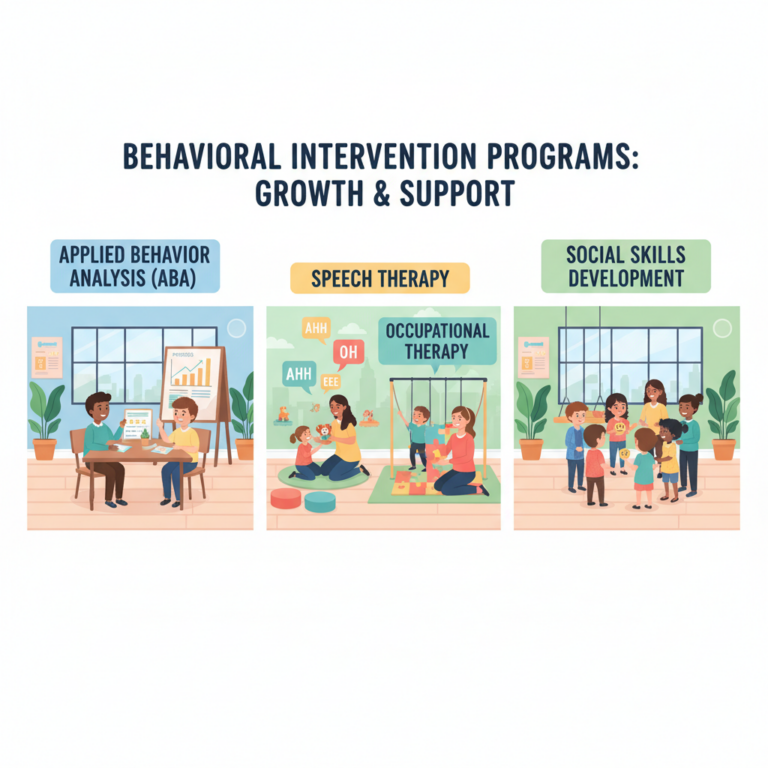
These services can include coaching on time management, using planners or apps, breaking tasks into steps, and creating routines that reduce decision fatigue. Therapists may integrate elements of Applied Behavior Analysis, a research-supported approach that encourages desired behaviors and reduces behaviors that interfere with your goals, while carefully tracking your progress over time [2].
Over time, you learn to monitor your own attention, energy, and stress levels. This self-awareness makes it easier to advocate for yourself at school, work, or in relationships, and to adjust your environment so that it works better for you instead of constantly pushing against your limits.
Communication, social skills, and social maturity
Communication can be one of your greatest strengths or one of your biggest barriers, depending on how your autism presents. Adult autism services frequently include speech and language therapy, the most common developmental therapy used with autistic people. It focuses on improving how you understand and use language and may involve spoken language or other communication methods such as signs, pictures, gestures, or communication devices [2].
Beyond basic communication, you might want to build confidence in social situations. Programs focused on adult social skills autism and autism social maturity training help you practice:
- Reading social cues and body language
- Starting, maintaining, and ending conversations
- Navigating friendships, dating, and boundaries
- Handling conflict and misunderstandings
Group-based options can be especially useful because they let you practice skills in real time with peers. For example, Autism United of Wisconsin runs the Southeastern Wisconsin Autistic Navigators (SWAN) program, an adult group that meets in person and online so participants can practice social skills and build community connections in a setting tailored to autistic adults [3].
If you are a professional on the spectrum, specialized peer groups that focus on workplace communication and career concerns can be especially helpful. Autism United offers a virtual support group specifically for autistic professionals to talk about work-related challenges and accommodations [3].
Vocational training and employment support
Finding and keeping a job that fits you is a major part of adult life. Many adult autism services focus on helping you explore your interests, build job skills, and navigate the workplace. Programs like autism vocational training program and job skills autism training are designed to bridge the gap between your abilities and real-world employment demands.
These services might include:
- Career assessment to identify your strengths and preferences
- Workplace readiness training, such as resume writing and interview practice
- Supported internships or volunteer opportunities to gain experience
- On-the-job coaching that helps you adjust to new tasks or environments
The Rutgers Center for Adult Autism Services is one example of a program that combines vocational training, academic support, social support, and clinical services to help adults on the spectrum integrate into campus and community life [4]. Their model shows how coordinated services can move you toward independent, meaningful work instead of short-term or mismatched jobs.
Vocational services often collaborate with state disability agencies or Medicaid-funded programs so that you can access job coaching or supported employment without carrying the full financial burden yourself.
Mental health and clinical supports
Mental health challenges like anxiety, depression, or sleep problems often appear alongside autism. Comprehensive adult autism services recognize that you may need both autism-specific supports and mental health treatment at the same time. A multidisciplinary approach, involving psychologists, psychiatrists, and other clinicians, helps you address both sets of needs together rather than separately [1].
Evidence-based therapies, including cognitive behavioral therapy and other structured approaches, can be adapted to autistic communication styles and sensory needs. In some cases, medication can be used to manage co-occurring symptoms such as anxiety, depression, seizures, or sleep disturbances, but it should always be prescribed and monitored by doctors experienced in ASD so that benefits and side effects are carefully balanced [2].
Programs such as the Rutgers Psychological Services Clinic and Intensive Outpatient Clinic provide clinical care tailored for adults on the spectrum, offering consistent, autism-informed support instead of general mental health services that may not fit your needs [4].
When your autism supports and mental health care are coordinated, you are less likely to fall through the cracks between systems and more likely to experience steady progress.
Community integration, recreation, and social life
Living well with autism is not only about services. It is also about connection, enjoyment, and community. Adult autism services increasingly recognize the importance of structured community integration autism programs and autism recreation and social programs that make it easier for you to participate in activities you enjoy.
These opportunities might include:
- Social clubs or game nights designed for autistic adults
- Supported outings to museums, parks, or community events
- Sensory-friendly concerts, movies, or sports events
- Conferences and retreats that are autism friendly
For instance, the Autism eXchange Annual Conference and Staycation in Wisconsin combines educational sessions with sensory-friendly, family-focused recreation in an inclusive environment at a resort and waterpark [3]. Events like this give you a chance to relax and connect with people who understand your experiences without needing to mask or hide your traits.
Some states also support community integration through disability programs. In Wisconsin, services are coordinated through local Aging and Disability Resource Centers, and options like the Family Care program, Family Care Partnership, and IRIS (Include, Respect, I Self-Direct) allow adults with disabilities, including autism, to receive support in their homes and communities while having a say in how their services are delivered [5].
Specialized tracks and structured programs
You may prefer services that are tailored to your stage of life or specific goals rather than broad, one-size-fits-all supports. Many organizations now offer specialized tracks such as:
- Adolescent autism support services for late teens preparing for graduation
- Autism transition services after school for young adults leaving high school or early college
- Behavioral support for teens with autism if you need help with emotional or behavioral challenges during transition years
Other specialized tracks focus on independent living and adulthood more broadly, combining multiple elements from this article, such as autism independent living programs, autism life skills training, and community integration autism.
Comprehensive programs like Rutgers’ four-unit model, which includes Community-Based Programming, a College Support Program, a Psychological Services Clinic, and an Intensive Outpatient Clinic, show how these tracks can work together to support your autonomy and long-term success [4].
Pulling it all together for lifetime support
Adult autism services are most effective when they form a connected network instead of a series of isolated appointments. Your diagnosis, transition planning, life skills training, vocational support, mental health care, and community activities all work best when they are coordinated and built around your long-term goals.
If you are just getting started, begin with a clear transition or life plan using resources like autism transition to adulthood and life planning autism services. Then, layer in the supports that match your priorities right now, such as autism vocational training program, autism daily living skills program, or adult social skills autism.
As your needs change, you can shift to different autism lifetime support programs that continue to respect your independence while offering the structure and safety you want. The goal is not to fit into someone else’s idea of adulthood, but to build a life in which your autistic strengths are recognized, your challenges are supported, and you have meaningful control over your future.